
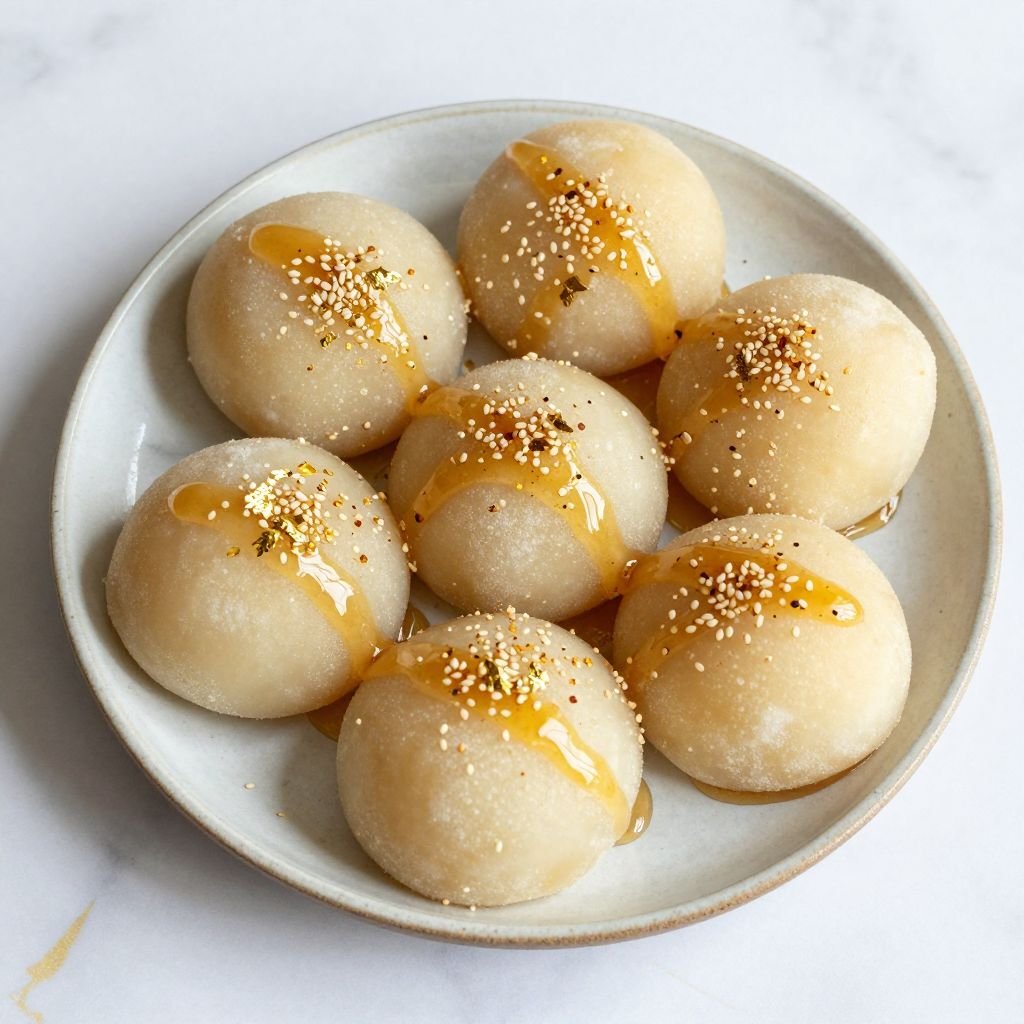
The first bite delivers a cloud-like chew that stretches and bounces back, coating your mouth with subtle honey sweetness. These golden-hued Japanese honey mochi balls transform three simple ingredients into an addictive treat that’s both delicate and satisfyingly chewy. Unlike dense Western sweets, this traditional confection strikes that perfect balance between soft pillowy texture and gentle resistance that makes you reach for just one more.
Why You’ll Love This Recipe
- Minimal ingredients, maximum impact — just mochiko rice flour, honey, and water create authentic Japanese texture
- Ready in 25 minutes from mixing bowl to serving plate, with no special equipment required
- Naturally gluten-free using sweet rice flour, perfect for guests with dietary restrictions
- Stays chewy for days when stored properly, actually improving in texture after a few hours of rest
- Endless customization potential — roll in kinako, matcha powder, or coat with your favorite toppings
Pro Tips
- Steam, don’t microwave — while microwaving is faster, steaming creates more even texture and prevents rubbery edges that can form from hot spots
- Oil your hands generously before shaping the warm mochi, or it will stick relentlessly to your skin; sesame oil adds subtle flavor while neutral oil keeps it pure
- Use quality honey since its flavor shines through — clover honey offers mild sweetness while buckwheat honey adds deeper, almost caramel notes
- Knead while still hot for the smoothest, most elastic texture; waiting until it cools makes the dough stiff and harder to shape into uniform pieces
Sweet Chewy Japanese Honey Mochi
Ingredients
Method
- Line a steamer basket with parchment paper or a clean kitchen towel. Fill the steamer pot with water and bring to a rolling boil over high heat.
- In a medium heatproof bowl, whisk together the mochiko and water until completely smooth with no lumps. Stir in the honey until evenly incorporated.
- Place the bowl in the steamer basket, cover with a tight-fitting lid, and steam for 15 minutes. The mixture should transform from cloudy liquid to translucent, stretchy dough.
- Remove the bowl carefully using oven mitts. While the mochi is still hot, oil your hands generously and knead the dough directly in the bowl for 2-3 minutes until smooth and elastic.
- Dust your work surface heavily with potato starch. Turn the hot mochi out onto the surface and pat into a thick rectangle about 1/2-inch thick.
- Oil a sharp knife and cut the mochi into 12 equal squares or use oiled hands to pinch off golf ball-sized pieces and roll into smooth spheres.
- Dust each piece lightly with additional starch to prevent sticking. Let cool for 10 minutes before serving to allow the texture to set properly.
Frequently Asked Questions
Can I use regular all-purpose flour instead of mochiko?
No, regular wheat flour won’t create the signature chewy texture. Mochiko (sweet rice flour) contains specific starches that gelatinize when steamed, creating that stretchy bounce. Regular flour will produce a dense, cake-like result instead.
Why is my mochi too sticky to handle?
The dough is naturally sticky when hot. Oil your hands thoroughly before touching it, and let it cool for 2-3 minutes after steaming. If it’s still unmanageable, you used too much water — next time reduce by 1 tablespoon.
How do I prevent the mochi from drying out?
Store in an airtight container at room temperature with a piece of plastic wrap pressed directly against the surface. They’ll stay perfectly chewy for 3-4 days. Don’t refrigerate, as cold temperatures make them hard and chalky.
Can I flavor the mochi with something other than honey?
Absolutely. Replace half the honey with maple syrup for deeper flavor, or add 1 teaspoon of vanilla extract to the mixture. You can also knead in matcha powder or cocoa powder after steaming for colored variations.
Storage & Serving
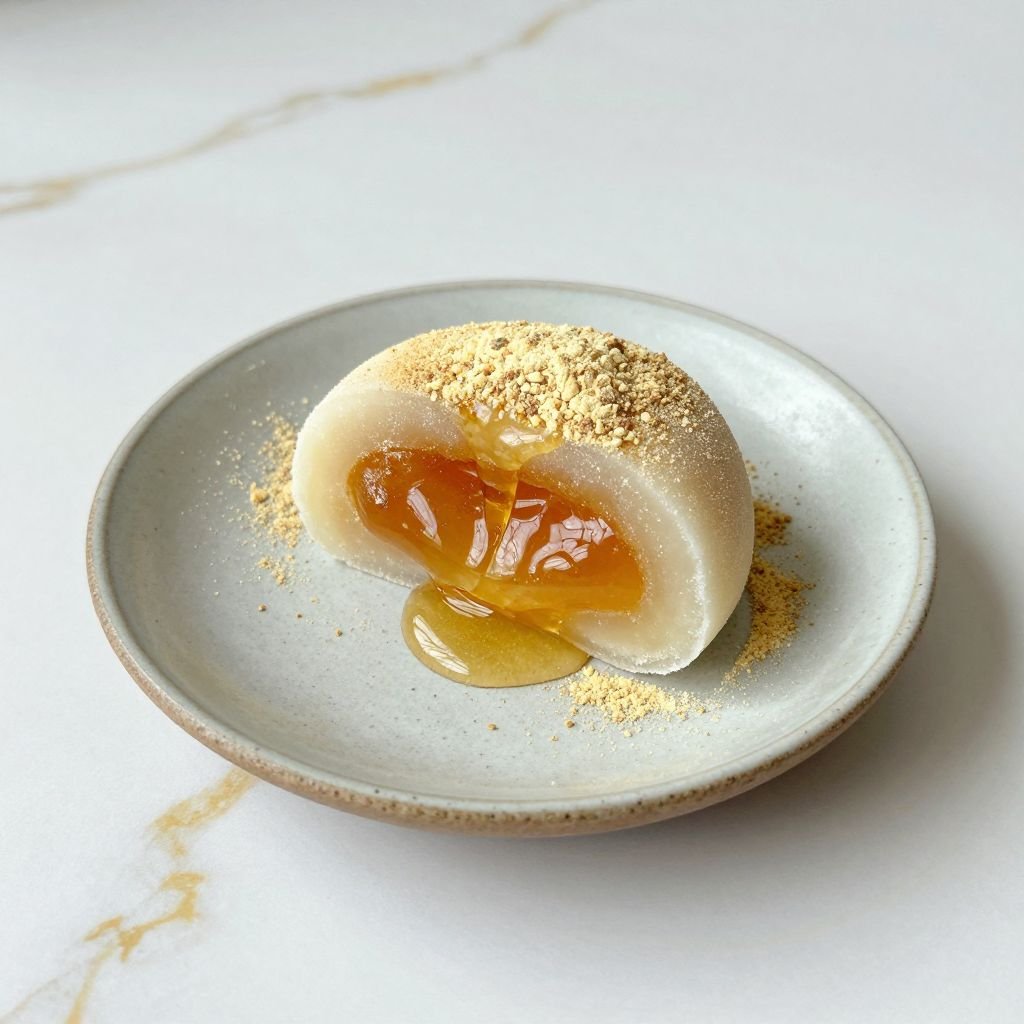
These mochi keep beautifully at room temperature in an airtight container for up to 4 days — they actually develop a slightly firmer, more refined chew after resting overnight. Avoid refrigeration, which hardens the texture irreversibly. Serve them plain to appreciate the honey flavor, dust with kinako (roasted soybean powder) for nutty depth, or wrap around sweet red bean paste for traditional daifuku. They’re perfect alongside green tea, as an afternoon snack, or packaged in small boxes as homemade gifts.
Pull these together on a quiet afternoon and discover why this centuries-old treat has captivated generations with its impossibly simple sweetness.