
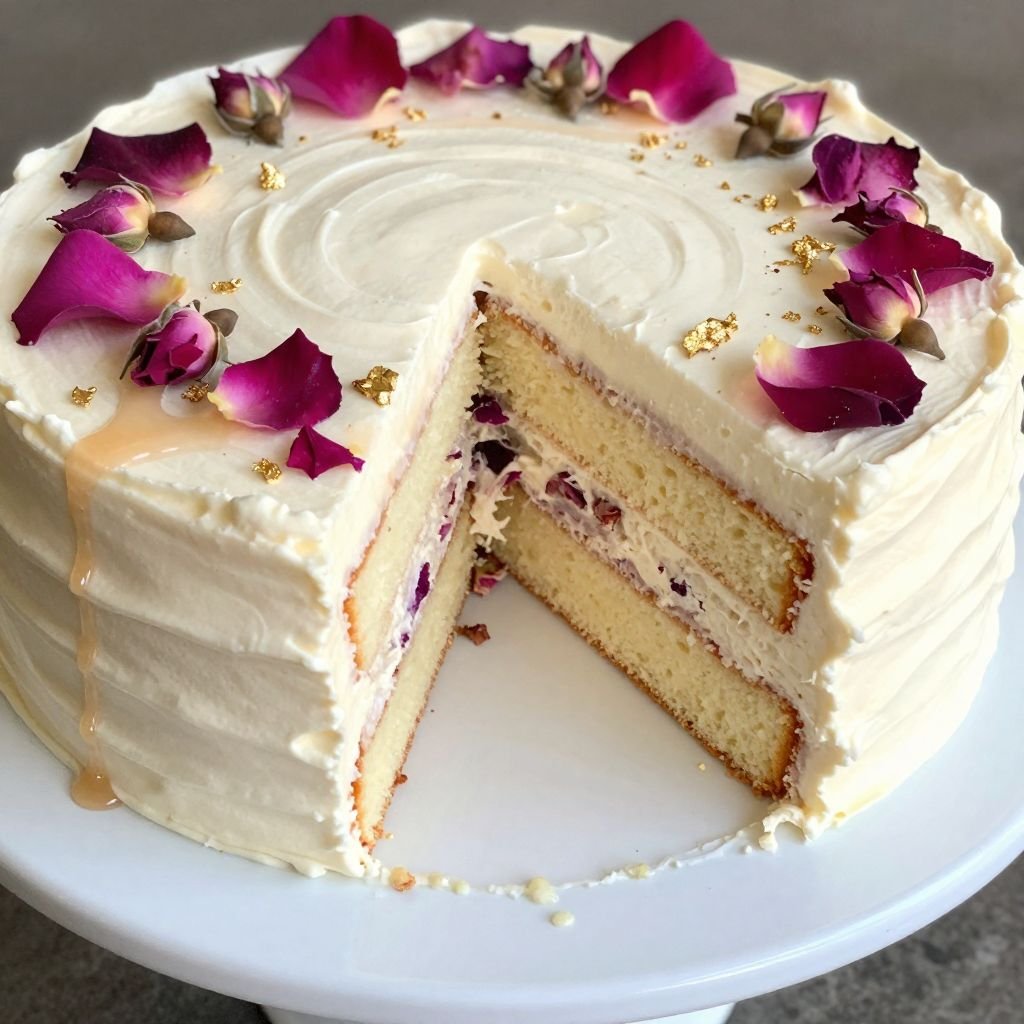
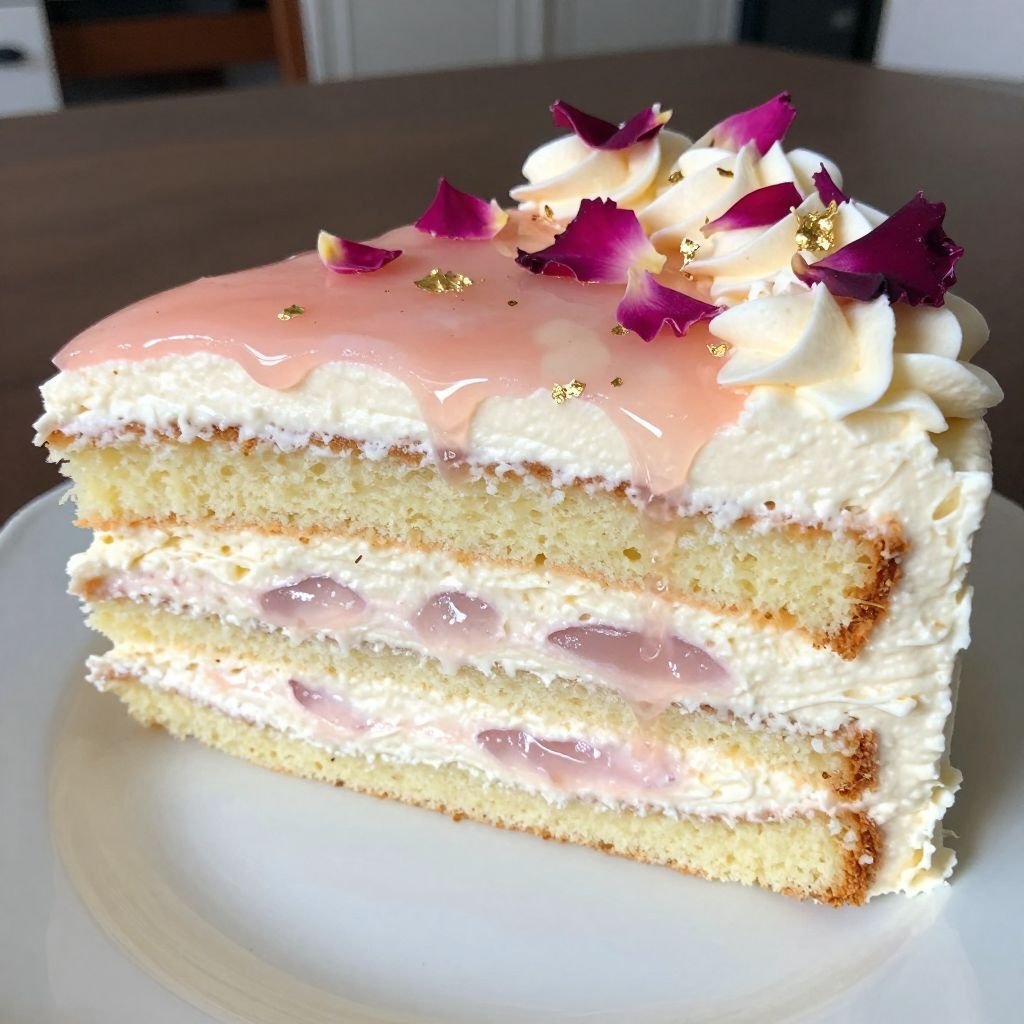
Picture this: three airy vanilla layers brushed with rose syrup, stacked high and cloaked in silky buttercream infused with the gentle perfume of real rosewater. This showstopper delivers the elegance of a French pâtisserie with the comfort of homemade baking. The delicate floral notes never overpower — they dance alongside vanilla in perfect harmony, making every bite both familiar and enchanting.
Why You’ll Love This Recipe
- Bakery-quality results at home — The crumb is tender and fine, not dense or crumbly, thanks to the reverse creaming method that creates an impossibly soft texture
- Make-ahead friendly — Bake the layers up to 2 days in advance, wrap them well, and frost the day of your celebration without the stress
- Flavor balance perfection — Rose can taste soapy if overdone, but this recipe uses just enough to intrigue without overwhelming
- Stunning presentation with minimal effort — Even a simple smooth finish looks professionally elegant, and it takes piping like a dream if you want to go fancy
- Crowd-pleaser for special occasions — Sophisticated enough for weddings and bridal showers, yet approachable enough that everyone asks for seconds
Pro Tips
- Measure rosewater carefully — Start with the recipe amount and taste the buttercream before adding more. Quality matters here — choose food-grade rosewater from Middle Eastern grocers or specialty shops, not craft store versions meant for potpourri
- Bring all dairy to room temperature — Cold eggs and butter create a curdled batter that bakes up dense. Set everything out 1-2 hours before mixing, or quick-temper eggs in warm water for 5 minutes
- Level your layers before stacking — Use a serrated knife or cake leveler to trim any domes. Flat layers mean stable stacking and a professional finish that won’t lean or slide
- Chill between crumb coat and final frost — A 20-minute refrigerator rest after the thin crumb coat locks in stray crumbs, so your final layer stays pristine and smooth
Elegant Vanilla Rose Buttercream Layer Cake
Ingredients
Method
- Preheat your oven to 350°F (175°C). Grease three 8-inch round cake pans, line the bottoms with parchment paper circles, and lightly flour the sides.
- In a large mixing bowl, whisk together the cake flour, baking powder, and salt until evenly combined. Set aside.
- In the bowl of a stand mixer fitted with the paddle attachment, beat the softened butter on medium speed for 1 minute until smooth and creamy.
- Add the granulated sugar to the butter and beat on medium-high speed for 3-4 minutes until the mixture is light, fluffy, and pale in color.
- Add the eggs one at a time, beating well after each addition and scraping down the sides of the bowl as needed. Mix in the vanilla bean paste and 1 teaspoon rosewater until incorporated.
- With the mixer on low speed, add the flour mixture in three additions, alternating with the milk in two additions, beginning and ending with the flour. Mix each addition just until combined — do not overmix or the cake will be tough.
- Divide the batter evenly among the three prepared pans, using a kitchen scale for precision if desired. Smooth the tops with an offset spatula and gently tap the pans on the counter to release air bubbles.
- Bake for 25-28 minutes, or until a toothpick inserted in the center comes out with a few moist crumbs and the tops spring back when lightly pressed. Rotate the pans halfway through for even baking.
- Cool the cakes in the pans on wire racks for 10 minutes, then turn them out onto the racks to cool completely before frosting, at least 1 hour.
- For the buttercream, beat 2 cups softened butter on medium speed for 2 minutes until creamy. Gradually add the powdered sugar one cup at a time, alternating with the heavy cream, beating on low until incorporated.
- Add 1 1/2 teaspoons rosewater and vanilla extract, then increase speed to medium-high and beat for 3-4 minutes until the buttercream is light, fluffy, and holds stiff peaks. Add a tiny amount of pink gel coloring if desired.
- Level the cooled cake layers with a serrated knife. Place the first layer on a cake stand or serving plate, spread with about 3/4 cup buttercream, then repeat with the second layer. Top with the final layer and apply a thin crumb coat over the entire cake. Refrigerate for 20 minutes, then apply the final layer of buttercream, smoothing with an offset spatula or bench scraper.
Frequently Asked Questions
Can I use vanilla extract instead of vanilla bean paste?
Yes, substitute with 2 teaspoons pure vanilla extract. The cake will still be delicious, though you’ll miss the visual flecks of vanilla bean that add a gourmet touch.
How do I prevent my buttercream from tasting too floral?
Start with 1 teaspoon of rosewater in the buttercream, then add more in 1/4 teaspoon increments while tasting. Stop when you detect a subtle floral hint — it should whisper, not shout.
Why is my cake crumbly when I slice it?
Overbaking dries out the crumb. Check for doneness at the minimum time — a toothpick should have a few moist crumbs, not come out bone-dry. Also ensure you’re measuring flour correctly by spooning it into the cup and leveling, not scooping directly.
How long will this cake stay fresh?
Store it in an airtight container or cake dome at room temperature for up to 2 days, or refrigerate for up to 5 days. Let refrigerated slices come to room temperature for 30 minutes before serving for the best texture and flavor.
Storage & Serving
Keep the frosted cake covered at room temperature for up to 2 days in a cool kitchen, or refrigerate for up to 5 days if your home runs warm. Freezing works beautifully — wrap unfrosted layers tightly in plastic and foil for up to 3 months. Serve this beauty at bridal showers, Mother’s Day brunches, or spring garden parties alongside sparkling wine or Earl Grey tea. Fresh berries and edible rose petals make stunning garnishes that echo the floral theme without adding extra work.
This is the cake that earns you a reputation as the baker in your circle — give it a try and watch your guests fall quiet after that first fork-tender bite.