
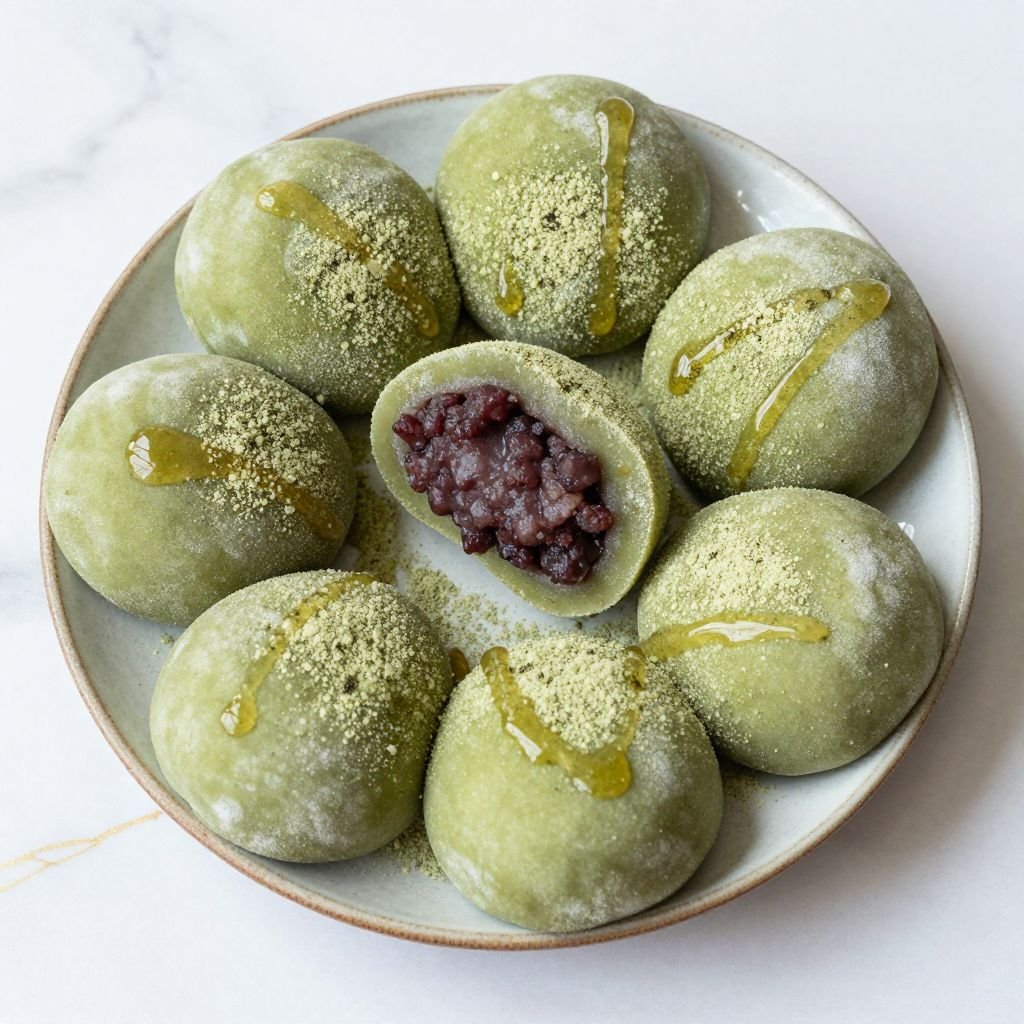
The first bite of these pillowy mochi reveals a delicate green tea sweetness that melts on your tongue, leaving behind the earthy warmth of premium matcha. These soft, chewy Japanese treats strike the perfect balance between tender and bouncy, with just enough sweetness to let the matcha shine. Whether you’re a mochi devotee or curious beginner, this recipe demystifies the art of making authentic Japanese confections at home.
Why You’ll Love This Recipe
- Ready in 30 minutes from start to finish, no special equipment beyond a microwave and mixing bowl
- Uses shiratamako (sweet rice flour) for that signature QQ texture — impossibly soft yet stretchy
- Make-ahead friendly: these stay perfectly chewy for 2 days at room temperature
- Customizable matcha intensity, so you control how earthy or sweet each batch turns out
- Impressive presentation with minimal effort — dust with cornstarch for a professional finish that looks bakery-worthy
Pro Tips
- Use culinary-grade matcha (not ceremonial) for baking — it’s more affordable and stands up to heat without turning bitter
- Work quickly once the mochi comes out of the microwave, as it firms up fast. Keep a small bowl of water nearby to dampen your hands and prevent sticking
- Don’t skip the cornstarch dusting station — coat your work surface, rolling pin, and hands generously to make shaping effortless
- For extra depth, add a pinch of salt to the dough. It amplifies the matcha flavor and balances the sweetness beautifully
- Steam your mochi dough instead of microwaving if you want an even silkier texture, though microwave works perfectly for most home bakers
Soft Chewy Japanese Matcha Mochi
Ingredients
Method
- In a microwave-safe bowl, whisk together the sweet rice flour, matcha powder, sugar, and salt until no lumps remain. Pour in the water and whisk until completely smooth with no dry pockets.
- Cover the bowl loosely with plastic wrap and microwave on high for 1 minute. Remove and stir vigorously with a wet spatula. The mixture will be partially cooked and slightly thickened.
- Microwave again for 1 more minute on high, then stir thoroughly. The dough should look glossy, translucent, and stretchy at this point with no white chalky spots.
- Prepare your work surface by dusting it generously with cornstarch. Turn the hot mochi dough out onto the cornstarch and dust the top heavily as well.
- Using a cornstarch-dusted rolling pin or your hands, gently flatten the mochi into a rectangle about 1/2-inch thick. Work quickly while it’s still warm and pliable.
- Cut into 8-10 equal squares or circles using a sharp knife or cookie cutter dusted with cornstarch. Lift each piece carefully and dust all sides with more cornstarch to prevent sticking.
- Let the mochi cool completely at room temperature for 10-15 minutes before serving. The texture will firm up slightly as it cools but remain soft and chewy.
Frequently Asked Questions
Can I use regular rice flour instead of sweet rice flour?
No, regular rice flour won’t work for this recipe. Sweet rice flour (mochiko or shiratamako) has a much higher starch content that creates the signature chewy, stretchy texture. Regular rice flour will give you a crumbly, dense result instead.
How do I prevent the mochi from sticking to everything?
Dust every surface generously with cornstarch or potato starch — your hands, the work surface, the rolling pin, and even the finished mochi. Work in small batches and re-dust as needed. If it gets too sticky, pop it in the fridge for 5 minutes to firm up slightly.
What’s the best way to store homemade mochi?
Store in an airtight container at room temperature for up to 2 days, separated by parchment paper squares. Don’t refrigerate unless your kitchen is very warm, as cold temperatures make mochi hard and lose its chew.
Why did my mochi turn out hard instead of soft?
The most common cause is overcooking — whether in the microwave or steamer. Mochi should look slightly translucent and glossy when done, not chalky white. Undercooking slightly is better than overdoing it, as residual heat continues cooking the dough during kneading.
Storage & Serving
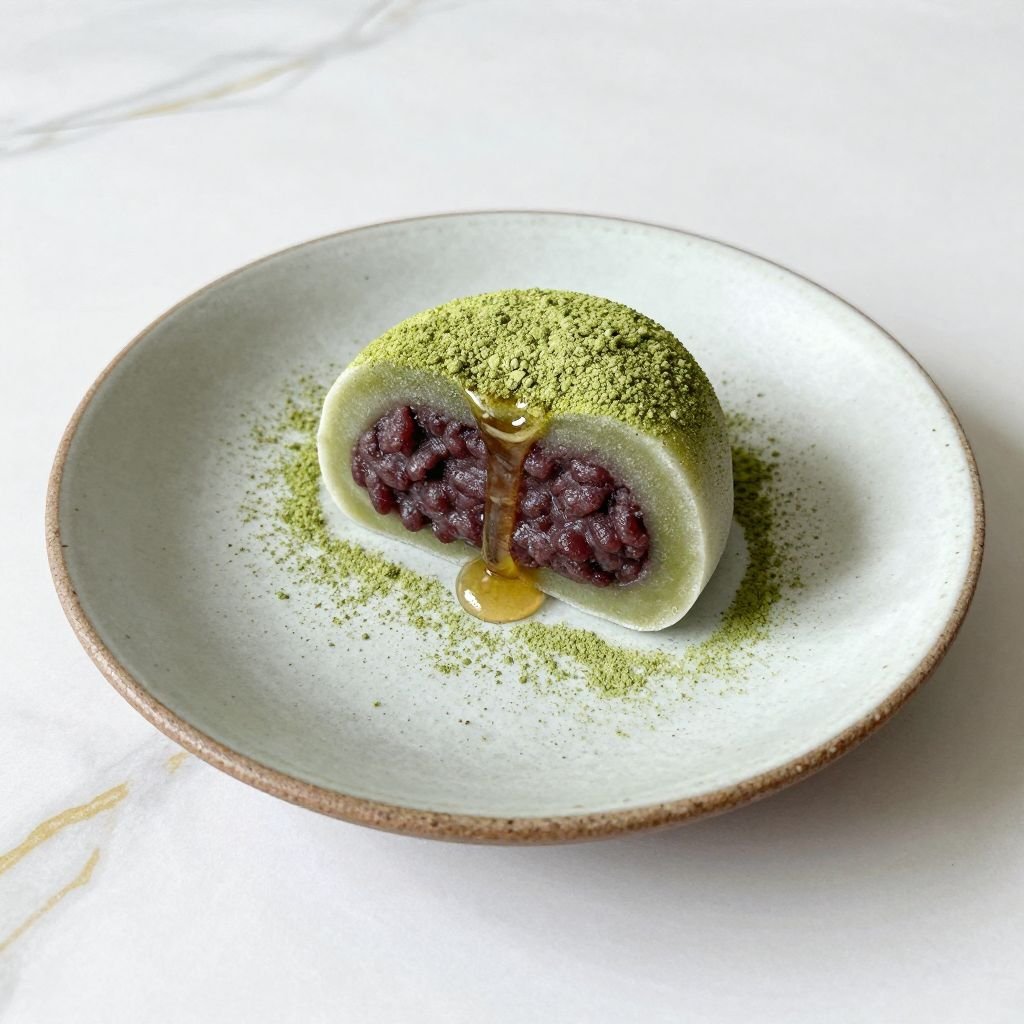
Keep these mochi at room temperature in an airtight container with parchment between layers for up to 2 days — they’re best enjoyed fresh when the texture is at peak softness. Serve alongside hot green tea for an authentic Japanese tea time experience, dust with kinako (roasted soybean powder) for a nutty twist, or fill with sweet red bean paste for traditional daifuku. They also pair beautifully with vanilla ice cream as a chewy textural contrast.
These delicate green tea treasures bring a taste of Japan to your kitchen with surprisingly simple steps — grab your sweet rice flour and discover why mochi lovers can never stop at just one.