
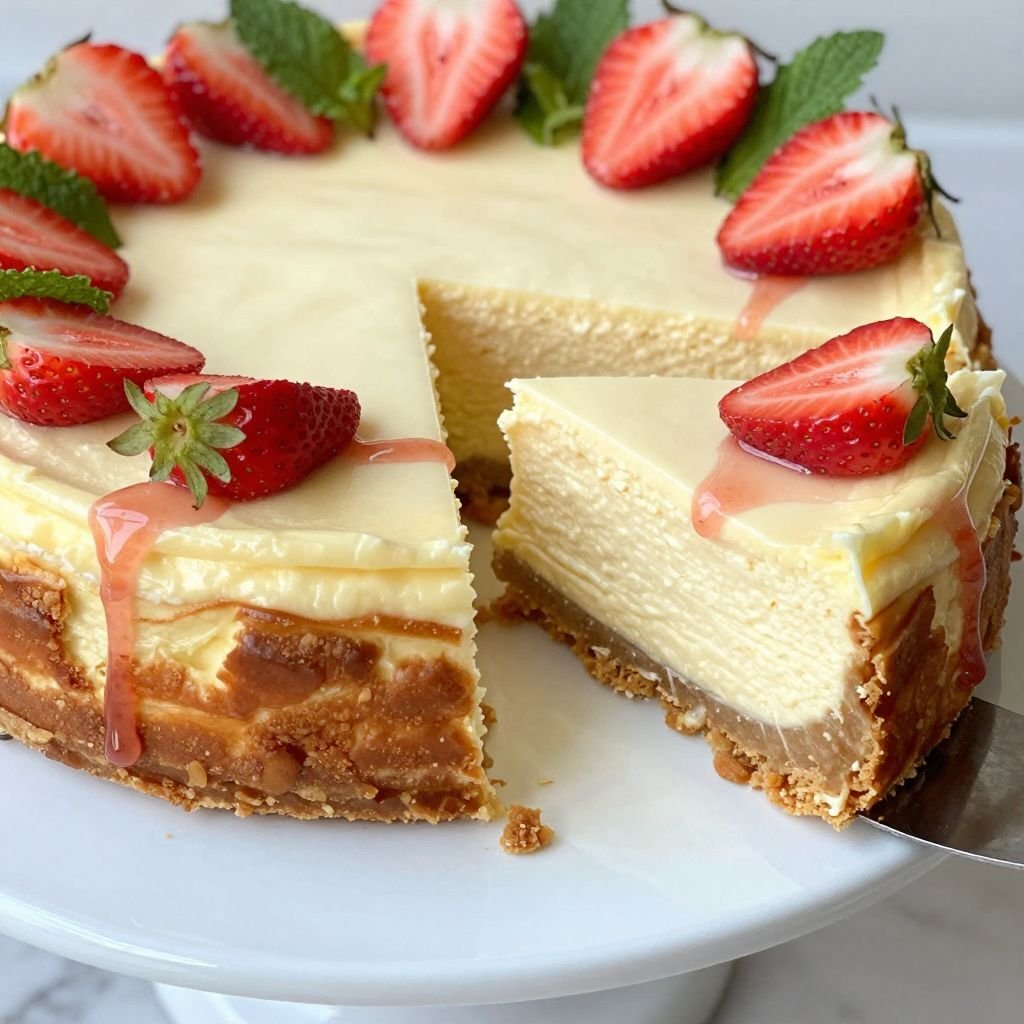
Imagine sinking a fork into silky, cloud-like cream cheese that melts on your tongue with just the right amount of tanginess — no gummy texture, no cracks, just pure indulgence. This classic dessert brings that iconic New York deli experience straight to your kitchen with a buttery graham cracker crust and a filling so smooth it practically glows.
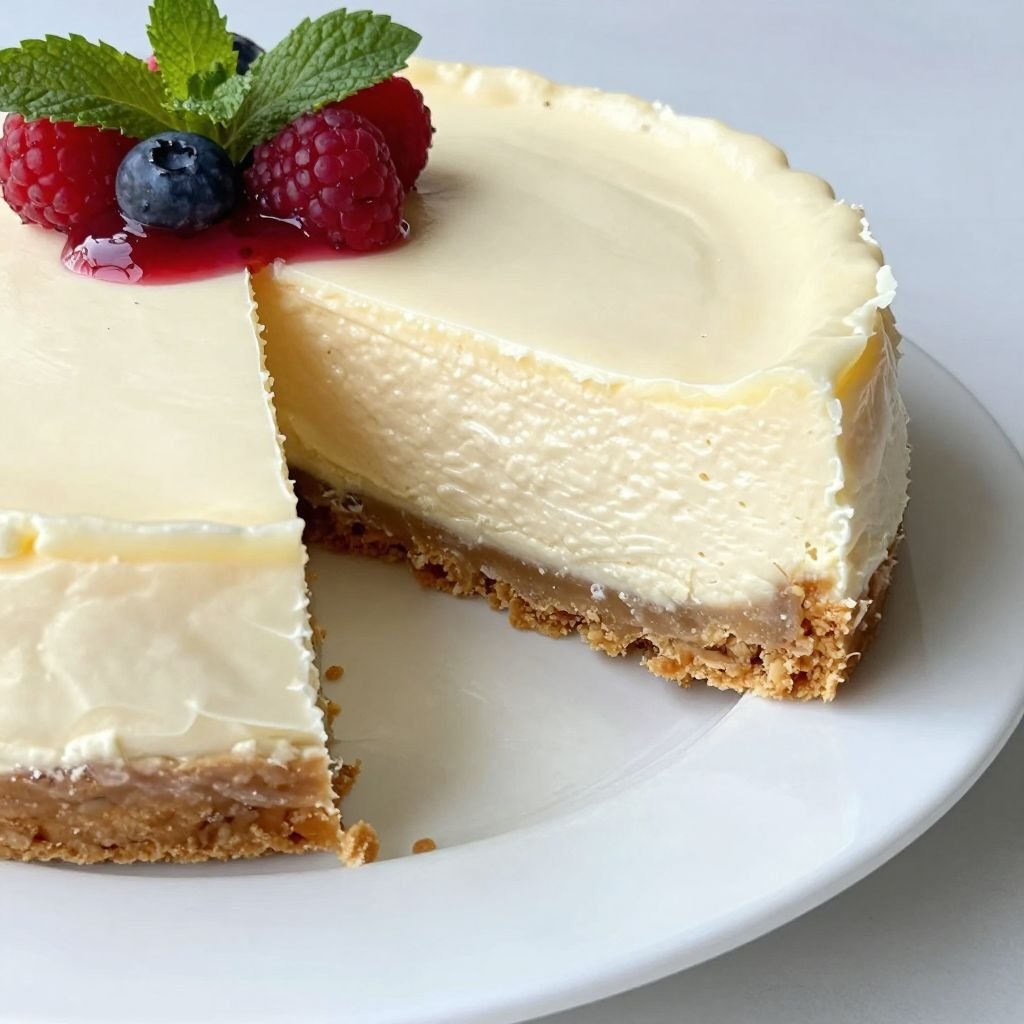
The magic lies in the slow bake and gentle cool-down that create that signature dense-yet-creamy texture that made New York famous for this dessert.
Why You’ll Love This Recipe
- One foolproof method prevents cracks and delivers bakery-perfect results every single time
- Dense, rich filling that slices clean without falling apart — perfect for entertaining
- Make it 1-2 days ahead so flavors deepen and you stay stress-free on party day
- Uses everyday ingredients you probably already have in your fridge
- The water bath technique ensures even baking without any guesswork
Pro Tips
- Room temperature ingredients are non-negotiable — cold cream cheese creates lumps no amount of mixing can fix. Set everything out 2-3 hours before you start.
- Wrap your springform pan in two layers of heavy-duty aluminum foil before the water bath to prevent any seepage. Press the foil up the sides and crimp tightly.
- Don’t open the oven door during baking or the first hour of cooling. Sudden temperature changes cause cracks. The cheesecake will look slightly jiggly in the center when done — that’s exactly what you want.
- Run a thin knife around the edges immediately after removing from the oven. This prevents the top from pulling and cracking as it cools and contracts.
Creamy New York Style Cheesecake
Ingredients
Method
- Preheat oven to 325°F (163°C). Wrap the outside of a 9-inch springform pan with two layers of heavy-duty aluminum foil, pressing it up the sides. This prevents water from seeping in during the water bath.
- Combine graham cracker crumbs, melted butter, and 1/4 cup sugar in a bowl until the mixture resembles wet sand. Press firmly into the bottom of the prepared pan, using the bottom of a measuring cup to pack it down. Bake for 10 minutes, then set aside to cool.
- Beat the cream cheese on medium-low speed for 2-3 minutes until completely smooth with no lumps, scraping down the bowl frequently. Add 1 1/4 cups sugar and beat for 1 minute until just combined.
- Add eggs one at a time, beating on low speed for 10-15 seconds after each addition until just incorporated. Overmixing at this stage creates air bubbles that cause cracks.
- Add sour cream, vanilla extract, flour, and salt. Beat on low speed for 30 seconds until the batter is smooth and uniform. Scrape the bowl one final time to ensure everything is incorporated.
- Pour the batter over the cooled crust and smooth the top with a spatula. Tap the pan gently on the counter 2-3 times to release any air bubbles.
- Place the springform pan inside a larger roasting pan. Pour hot water into the roasting pan until it reaches halfway up the sides of the springform pan. Carefully transfer to the oven.
- Bake for 75-85 minutes until the edges are set and slightly puffed but the center 3-4 inches still wobbles like jello when gently shaken. The top should look matte, not shiny.
- Turn off the oven and crack the door open about 1 inch. Let the cheesecake cool in the oven for 1 hour. This gradual temperature change prevents cracking.
- Remove from the oven and water bath. Run a thin knife around the edges to loosen. Let cool completely at room temperature for 1 hour, then refrigerate uncovered for at least 8 hours or overnight before removing the springform ring and serving.
Frequently Asked Questions
Can I make this without a water bath?
While possible, the water bath prevents cracking and ensures even, gentle heat distribution. Without it, you risk a domed top, cracks, and uneven texture. If you must skip it, lower your oven temperature to 300°F and place a pan of water on the rack below.
Why did my cheesecake crack?
Cracks typically happen from overmixing (which incorporates too much air), overbaking, or cooling too quickly. Mix just until smooth, bake only until the edges set with a slight jiggle in the center, and let it cool gradually in the turned-off oven with the door cracked.
How do I know when it’s done baking?
The edges should be set and slightly puffed, while the center 3-4 inches should still wobble like jello when you gently shake the pan. It will firm up completely as it chills overnight in the refrigerator.
Can I use low-fat cream cheese?
Full-fat cream cheese is essential for the proper texture and richness. Low-fat versions contain more moisture and stabilizers that prevent that signature dense, creamy consistency. They also tend to crack more easily during baking.
Storage & Serving
Store covered in the refrigerator for up to 5 days — the flavor actually improves after day two as it mellows and sets. For longer storage, freeze individual slices wrapped tightly in plastic wrap and foil for up to 2 months. Serve chilled with fresh berries, fruit compote, or a simple dusting of powdered sugar. For the cleanest slices, dip your knife in hot water and wipe it clean between each cut.
Let this masterpiece chill overnight, then watch it disappear at your next gathering — one perfect, crack-free slice at a time.