
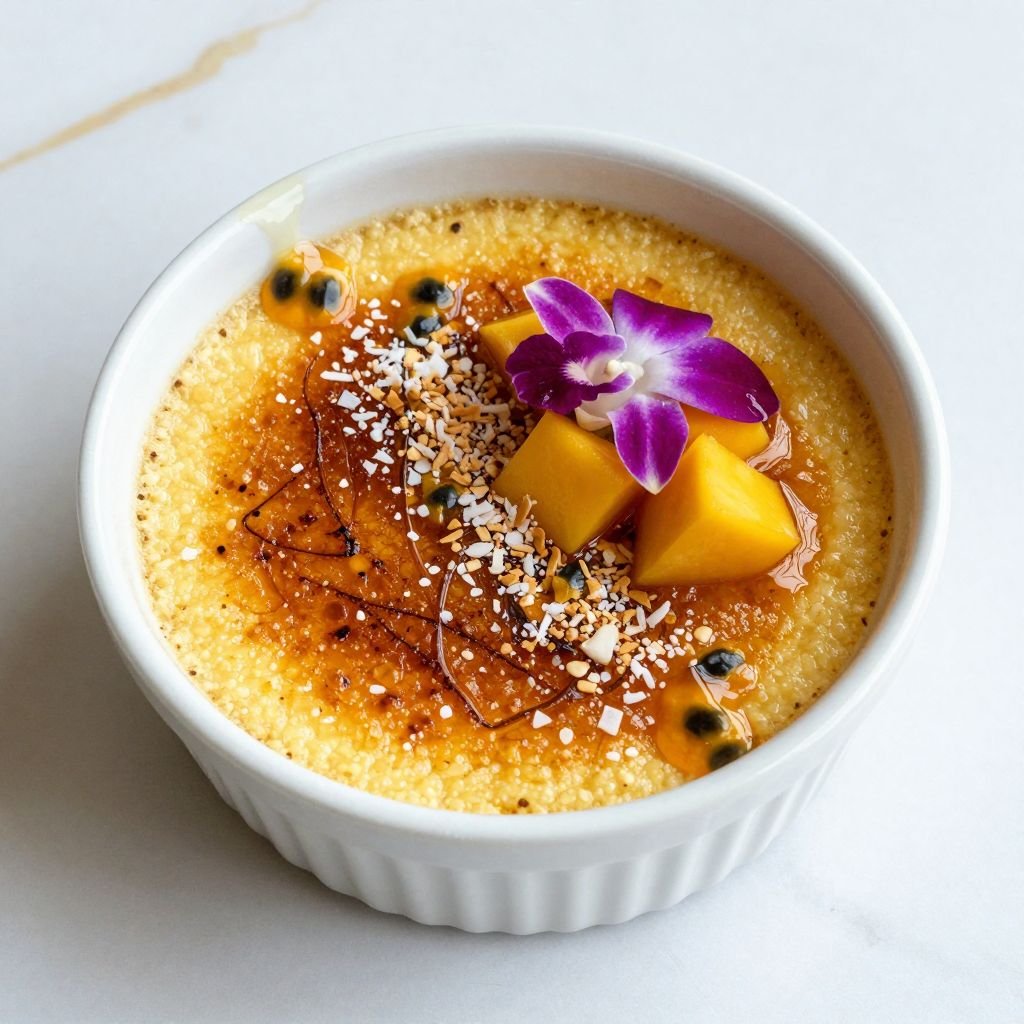
One flick of a torch, and the caramelized sugar shatters to reveal silky coconut custard infused with tropical vanilla and a whisper of lime. This isn’t your grandmother’s creme brulee — it’s a sun-drenched escape in a ramekin, where creamy coconut milk transforms the French classic into something utterly transporting. The toasted coconut garnish adds a final textural flourish that makes every bite feel like a mini vacation.
Why You’ll Love This Recipe
- Uses coconut milk instead of heavy cream for a lighter, naturally dairy-free custard with serious tropical flavor
- Requires only 6 ingredients you can find at any grocery store, no specialty equipment beyond a kitchen torch
- Make-ahead friendly — custards chill overnight, then torch just before serving for that signature crack
- The lime zest adds a bright, sophisticated note that balances the richness without tasting citrusy
- Impressive presentation that looks restaurant-quality but comes together in under 20 minutes of active work
Pro Tips
- Use full-fat coconut milk (not the beverage kind) and shake the can well before opening to ensure the cream and liquid are fully blended — separation leads to grainy custard
- Temper your egg yolks slowly by adding the hot coconut mixture one tablespoon at a time while whisking constantly; this prevents scrambling and creates that signature silky texture
- Bake in a water bath with the water reaching halfway up the ramekins — this gentle, even heat prevents curdling and ensures the custard sets without bubbles
- Let the sugar sit on the custard for 30 seconds before torching so it melts slightly and caramelizes evenly without burning in spots
Tropical Coconut Creme Brulee Recipe
Ingredients
Method
- Preheat oven to 325°F (165°C). Place four 6-ounce ramekins in a deep baking dish and set aside. Bring a kettle of water to a boil for the water bath.
- Heat the coconut milk in a medium saucepan over medium heat until it just begins to steam and small bubbles form around the edges, about 4-5 minutes. Do not let it boil. Remove from heat.
- In a medium bowl, whisk together the egg yolks, 1/3 cup sugar, vanilla extract, lime zest, and salt until the mixture is pale and slightly thickened, about 1 minute.
- Slowly pour the hot coconut milk into the egg mixture in a thin stream, whisking constantly to temper the eggs. Add the first few tablespoons very slowly to prevent curdling.
- Strain the custard through a fine-mesh sieve into a large measuring cup or pitcher to remove any cooked egg bits and the lime zest pieces. This ensures a perfectly smooth texture.
- Divide the custard evenly among the ramekins. Pour boiling water into the baking dish until it reaches halfway up the sides of the ramekins.
- Carefully transfer the baking dish to the oven and bake for 35-40 minutes, until the edges are set but the centers still jiggle slightly when gently shaken.
- Remove the ramekins from the water bath and let cool to room temperature, about 30 minutes. Cover with plastic wrap and refrigerate for at least 4 hours or overnight until completely chilled and set.
- Just before serving, blot any condensation from the custard surfaces with a paper towel. Sprinkle 1-1½ tablespoons of sugar evenly over each custard in a thin layer.
- Using a kitchen torch, hold the flame 2-3 inches from the surface and move it in circular motions until the sugar melts and caramelizes to a deep amber color. Let the sugar harden for 1-2 minutes, then garnish with toasted coconut if desired and serve immediately.
Frequently Asked Questions
Can I make this without a kitchen torch?
Yes, place the sugar-topped custards under a preheated broiler for 1-2 minutes, watching constantly. The broiler works but gives less control, so position the rack 3-4 inches from the heat and rotate ramekins for even caramelization.
What’s the best sugar for the brûlée topping?
Superfine or caster sugar creates the most even, glassy caramel layer. Regular granulated sugar works in a pinch but may caramelize less uniformly. Avoid powdered sugar completely — it contains cornstarch and won’t caramelize properly.
How do I know when the custard is done baking?
The edges should be set while the center jiggles slightly when you gently shake the ramekin — like soft-set gelatin. It will firm up completely as it chills. Overbaking creates a rubbery texture, so pull them when there’s still movement in the middle.
Can I substitute regular cream for coconut milk?
You can, but you’ll lose the tropical flavor that defines this recipe. If you must substitute, use equal parts heavy cream and add 1/2 teaspoon coconut extract to maintain some of that island essence.
Storage & Serving
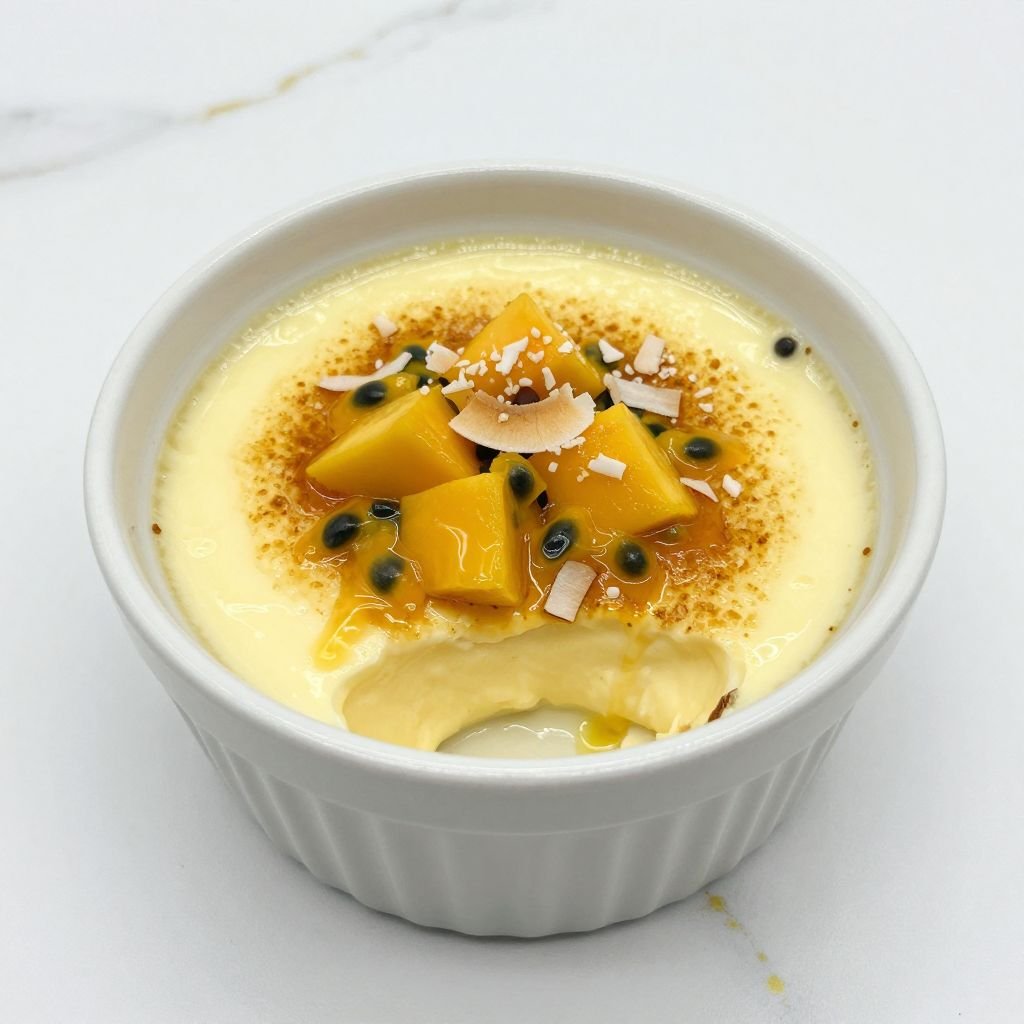
Store the baked custards covered with plastic wrap in the refrigerator for up to 3 days before torching — the sugar topping should always be added right before serving or it will dissolve. Serve alongside fresh mango slices, passion fruit pulp, or toasted coconut chips for extra tropical flair. These are stunning on a dessert platter with edible orchids or a lime wheel garnish for special occasions.
Crack into that golden sugar shell and let the contrast of warm caramel and cool coconut custard remind you why classics become classics — they’re endlessly adaptable and always worth the effort.