

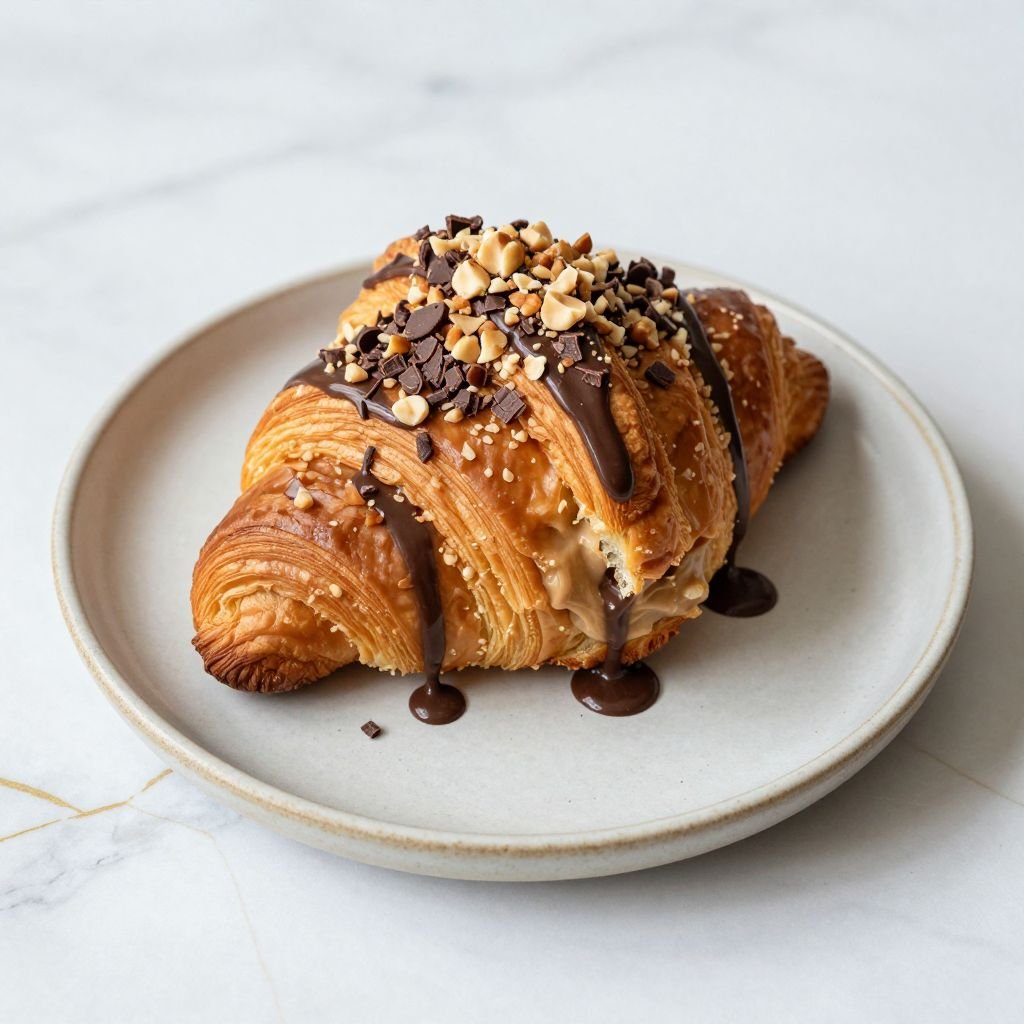
The buttery, golden layers of a perfectly baked croissant give way to a luscious hazelnut cream filling that melts on your tongue — this is the pastry that makes Parisian bakery windows irresistible. Each bite delivers a symphony of textures: crisp, shattering exterior and silky-smooth center that tastes like chocolate’s elegant cousin. This showstopping creation looks intimidating but comes together with surprisingly straightforward steps that any home baker can master.
Why You’ll Love This Recipe
- Bakery-quality results at home without professional equipment or years of training
- Make-ahead friendly dough can be shaped the night before and baked fresh in the morning
- The hazelnut cream filling stays perfectly creamy even after baking, never grainy or dry
- Impressive enough for special brunches but simple enough for a weekend treat
- Uses pantry staples plus one special ingredient (hazelnut paste) that transforms everything
Pro Tips
- Keep your butter cold during the lamination process — if the dough feels warm or greasy, refrigerate for 15 minutes before continuing. This creates those signature flaky layers.
- Toast the hazelnuts until deeply golden and fragrant before grinding them into the cream. This single step intensifies the nutty flavor by at least 50%.
- Brush the pastries with egg wash twice: once before filling and once after shaping. The double coat creates that mirror-like golden finish you see in French patisseries.
- Don’t overfill the center — 2 tablespoons of cream is the sweet spot. More than that and the filling will leak during baking and burn on your pan.
French Hazelnut Cream Croissant Pastry
Ingredients
Method
- In a large bowl, whisk together flour, sugar, and salt. Dissolve yeast in warm milk and let stand 5 minutes until foamy. Pour into flour mixture and stir until a shaggy dough forms. Knead on a lightly floured surface for 5 minutes until smooth. Wrap in plastic and refrigerate for 30 minutes.
- Roll chilled dough into a 12×18-inch rectangle on a floured surface. Arrange cold butter slices over two-thirds of the dough, leaving a 1-inch border. Fold the unbuttered third over the middle, then fold the remaining third over top like a letter. Rotate 90 degrees, roll into a rectangle again, and repeat the letter fold. Wrap and refrigerate for 1 hour.
- Make the hazelnut cream by combining ground hazelnuts, hazelnut paste, powdered sugar, heavy cream, and vanilla in a bowl. Mix until smooth and spreadable, adding 1 teaspoon more cream if too thick. Set aside at room temperature.
- Roll the laminated dough into a 10×20-inch rectangle about 1/4-inch thick. Cut into 8 rectangles approximately 5 inches wide. Brush each rectangle lightly with egg wash.
- Spoon 2 tablespoons of hazelnut cream onto the center of each rectangle. Fold the dough over the filling to create a pocket, pressing edges firmly to seal. Use a fork to crimp the sealed edges for extra security.
- Place shaped pastries on a parchment-lined baking sheet, spacing them 3 inches apart. Cover loosely with plastic wrap and let rest in a warm spot for 45 minutes until slightly puffed.
- Preheat oven to 375°F. Brush the tops and sides of each pastry generously with remaining egg wash, being careful not to let it pool on the pan.
- Bake for 22-26 minutes, rotating the pan halfway through, until deep golden brown with crispy, shattered layers visible on the sides. The bottoms should sound hollow when tapped.
- Transfer to a wire rack and cool for at least 15 minutes before serving. The filling will be molten hot immediately after baking and needs time to set to the perfect creamy consistency.
Frequently Asked Questions
Can I use store-bought puff pastry instead of croissant dough?
Yes, high-quality all-butter puff pastry works beautifully as a shortcut. The texture will be slightly different but still delicious and flaky. Thaw according to package directions before shaping.
How do I store leftover hazelnut cream?
Store the filling in an airtight container in the refrigerator for up to 5 days. Bring to room temperature and stir before using, as it will firm up when cold.
What if my dough tears during rolling?
Patch small tears by pinching the dough together and dusting lightly with flour. If the butter breaks through in large spots, fold the dough, refrigerate for 20 minutes, then continue — the cold will reseal it.
Can these be frozen before baking?
Absolutely! Shape the filled pastries, freeze on a baking sheet until solid, then transfer to a freezer bag for up to 2 months. Bake directly from frozen, adding 5 extra minutes to the baking time.
Storage & Serving
These pastries are best enjoyed within 6 hours of baking when the contrast between crisp exterior and creamy filling is at its peak. Store leftovers in an airtight container at room temperature for up to 2 days, then refresh in a 300°F oven for 5 minutes. Serve warm with espresso for an authentic French café experience, dust with powdered sugar for elegant presentation, or pair with fresh berries to cut the richness.
There’s nothing quite like pulling a tray of these golden beauties from your own oven — the aroma alone will have everyone rushing to the kitchen before they’ve fully cooled.