
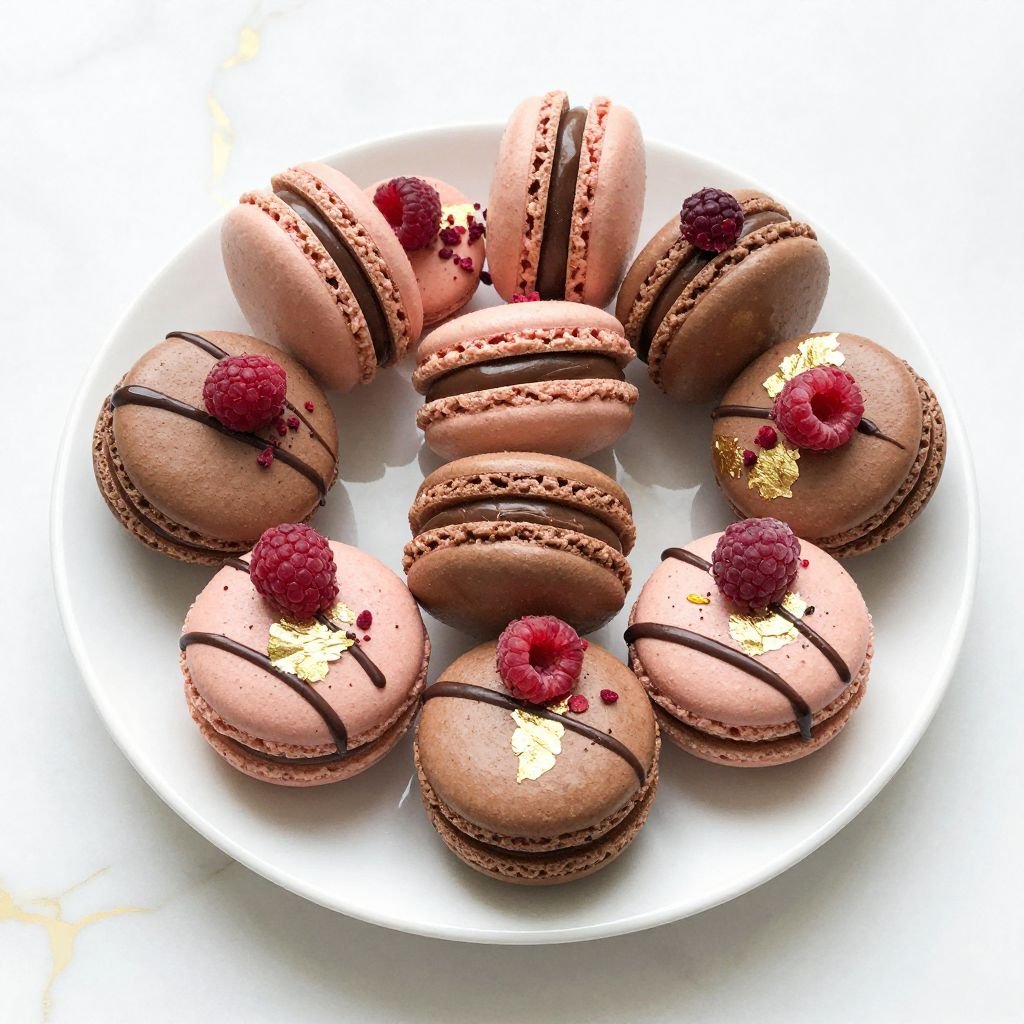
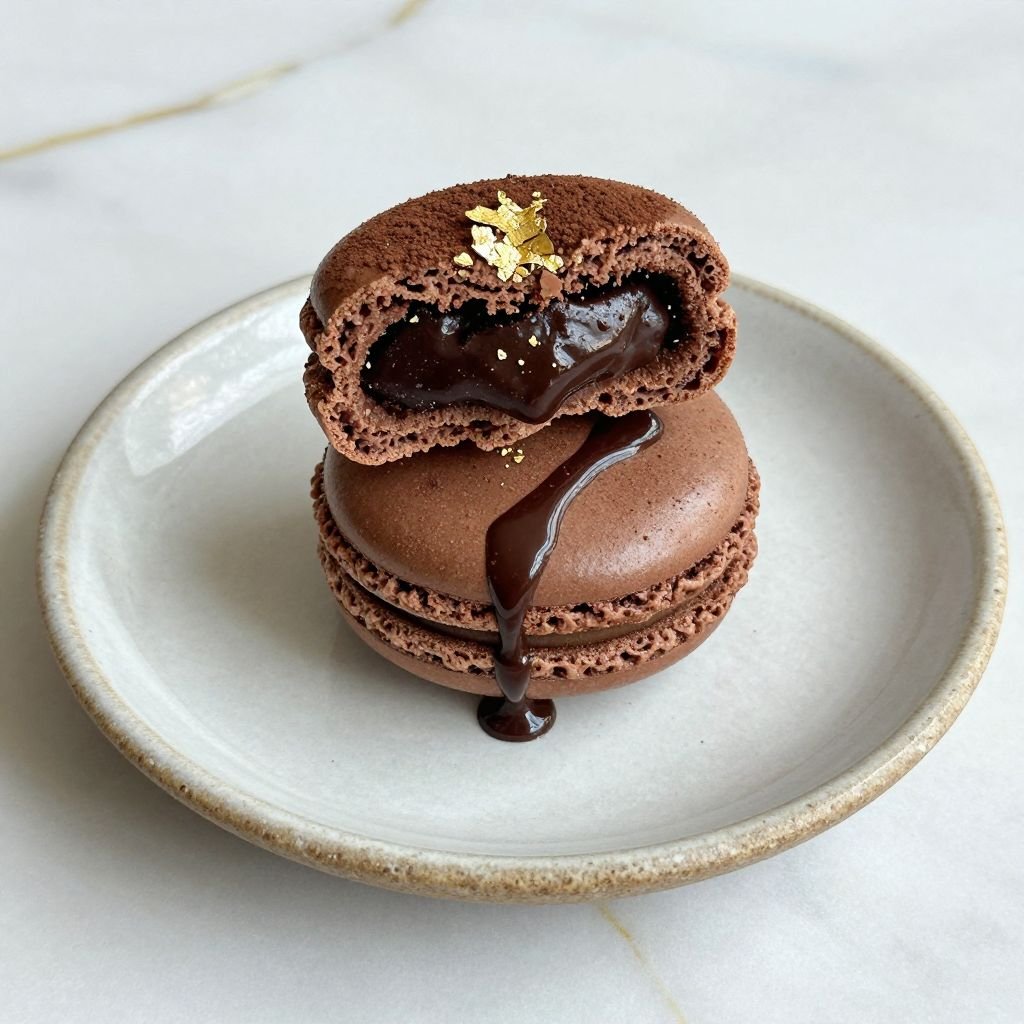
There’s a moment of pure magic when you bite through a crisp macaron shell into a glossy wave of dark chocolate ganache — the shell shatters delicately, the ganache melts on your tongue, and suddenly you’re transported to a Parisian pâtisserie. These French chocolate ganache macarons deliver that bakery-quality experience at home, with their signature smooth tops, ruffled feet, and intensely rich filling that strikes the perfect balance between bitter and sweet.
Why You’ll Love This Recipe
- Professional-looking results with foolproof techniques that demystify the notorious macaron-making process
- The ganache filling is silky, pipe-able, and stays perfectly creamy even after refrigeration
- Make-ahead friendly — shells can be frozen for up to 3 months, and assembled macarons actually improve after 24 hours in the fridge
- Requires no special equipment beyond a basic piping bag and kitchen scale for accuracy
- Dark chocolate ganache complements the almond shells without overwhelming sweetness, making these sophisticated enough for any celebration
Pro Tips
- Age your egg whites overnight in the refrigerator, uncovered, to reduce moisture and stabilize the meringue — this single step dramatically improves your success rate with smooth tops
- Tap the baking sheet firmly on the counter 5-6 times after piping to release trapped air bubbles that would otherwise create cracked, bumpy shells
- Let piped shells rest at room temperature for 30-60 minutes until they develop a dry skin you can touch without any batter sticking to your finger — this creates the signature feet
- Use a kitchen scale to measure ingredients in grams rather than cups, especially for almond flour and powdered sugar, as volume measurements vary too much for precision baking
- Cool the ganache to room temperature and whip it briefly before piping to achieve that luxurious, mousse-like texture that won’t squish out the sides
French Chocolate Ganache Macarons
Ingredients
Method
- Sift together the almond flour, powdered sugar, and cocoa powder three times to remove any lumps. Set aside. Line two baking sheets with parchment paper or silicone mats.
- In a clean, dry bowl, beat the aged egg whites and cream of tartar on medium speed until foamy. Gradually add granulated sugar one tablespoon at a time, then increase speed to high and beat until stiff, glossy peaks form, about 3-4 minutes.
- Fold the dry ingredients into the meringue in three additions using a flexible spatula. Use a folding and pressing motion against the bowl to deflate the batter slightly. Continue macaronage until the batter flows like lava and a ribbon disappears back into itself within 10-15 seconds.
- Transfer batter to a piping bag fitted with a round tip. Pipe 1.5-inch circles onto prepared sheets, spacing them 2 inches apart. Tap the sheets firmly on the counter 5-6 times to release air bubbles.
- Let piped shells rest at room temperature for 30-60 minutes until a dry skin forms that doesn’t stick when lightly touched. Preheat oven to 300°F during the last 15 minutes of resting time.
- Bake one sheet at a time for 15-17 minutes, rotating halfway through, until shells are set and don’t wiggle when touched. The feet should be fully developed and the tops matte. Cool completely on the baking sheet.
- For the ganache, heat heavy cream in a small saucepan until just simmering. Pour over chopped chocolate and let sit for 1 minute, then stir until completely smooth. Stir in butter until incorporated. Let cool to room temperature, then refrigerate for 30 minutes.
- Beat the cooled ganache with a hand mixer for 30-60 seconds until fluffy and lightened in color. Transfer to a piping bag and pipe a generous amount onto half the macaron shells. Sandwich with remaining shells, pressing gently.
- Refrigerate assembled macarons in an airtight container for 24 hours before serving to allow the flavors to meld and achieve the perfect texture. Bring to room temperature 15 minutes before eating.
Frequently Asked Questions
Why did my macarons crack on top?
Cracked tops usually mean the shells didn’t dry long enough before baking. The surface must form a complete skin that doesn’t stick to your finger when touched. In humid weather, this can take up to 90 minutes.
Can I use milk chocolate instead of dark chocolate for the ganache?
Yes, but reduce the cream slightly to 3/4 cup since milk chocolate is softer. Dark chocolate (60-70% cacao) creates a more stable filling with better flavor contrast against the sweet shells.
How do I know when the macaronage is done?
The batter should flow like lava and form a ribbon that disappears back into itself within 10-15 seconds. Test by lifting the spatula — if the ribbon breaks immediately, fold a few more times. Over-mixing makes flat, spread-out shells.
Do these really need to sit in the fridge overnight?
While you can eat them immediately, refrigerating assembled macarons for 24 hours allows the ganache to hydrate the shells slightly, creating that perfect chewy-yet-crisp texture that defines a truly excellent macaron.
Storage & Serving
Store assembled macarons in an airtight container in the refrigerator for up to 5 days, or freeze for up to 3 months. Bring to room temperature for 15 minutes before serving to soften the ganache and enhance the chocolate flavor. These shine on dessert platters alongside fresh raspberries, served with espresso, or packaged in clear boxes as elegant homemade gifts. The shells can be made 2-3 days ahead and stored unfilled in an airtight container at room temperature.
These chocolate ganache macarons transform an intimidating French pastry into your new signature dessert — take your time, follow the resting steps, and prepare for the most satisfying baking triumph of the year.