
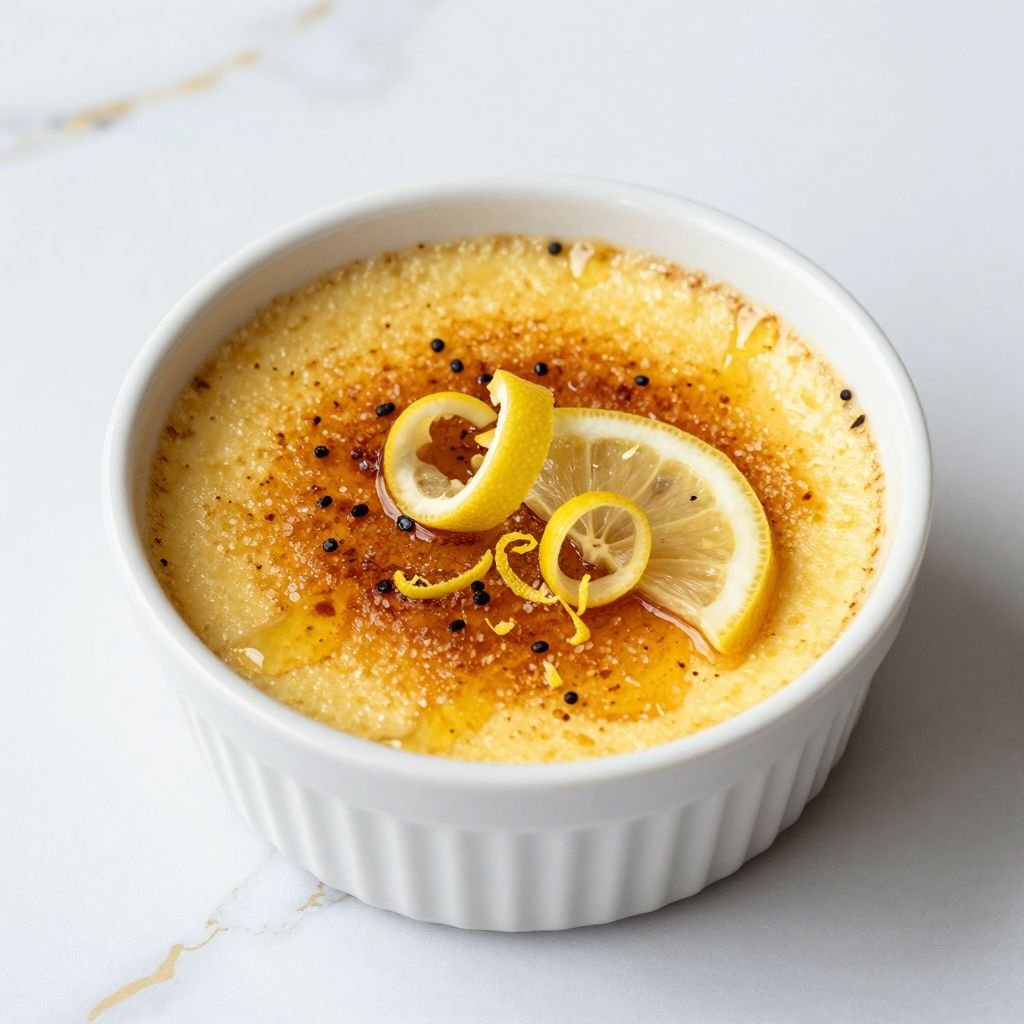
# Citrus Lemon Vanilla Bean Creme Brulee
The crack of a caramelized sugar shell gives way to silky, citrus-kissed custard studded with real vanilla bean specks — this is the elegant dessert that earns whispered compliments at every dinner party. Bright lemon zest cuts through the richness while Madagascar vanilla adds floral depth, creating a sophisticated twist on the French classic that tastes like sunshine in a ramekin.
Why You’ll Love This Recipe
- Ready to impress with restaurant-quality results using just 7 ingredients and basic ramekins
- Make-ahead friendly — custards chill overnight, then torch the tops 10 minutes before serving
- The citrus brightens the traditional custard without overwhelming the delicate vanilla flavor
- Each crack of the sugar crust delivers that iconic textural contrast every home cook dreams of mastering
- Perfect for intimate dinners or special occasions when you want an elegant finale without last-minute stress
Pro Tips
- Use the freshest eggs possible — they create the smoothest, most luxurious custard texture with no grainy aftertaste
- Scrape vanilla bean seeds directly into the cream while heating to extract maximum flavor, then steep the pod for 10 minutes before removing
- The water bath temperature matters — use hot tap water, not boiling, to prevent the custard edges from overcooking while centers stay creamy
- When torching the sugar, hold the flame 2-3 inches away and move in circles until amber spots appear, then let it harden for 2 minutes before serving for the crispest shell
Citrus Lemon Vanilla Bean Creme Brulee
Ingredients
Method
- Preheat oven to 325°F (160°C). Place six 6-ounce ramekins in a deep baking dish or roasting pan.
- Pour the heavy cream into a medium saucepan. Add the vanilla bean seeds and pod, then heat over medium heat until small bubbles appear around the edges, about 5 minutes. Remove from heat, cover, and steep for 10 minutes. Remove and discard the vanilla pod.
- In a large bowl, whisk together the egg yolks, 1/3 cup granulated sugar, lemon zest, and salt until smooth and pale yellow, about 1 minute. Do not overbeat or create foam.
- Slowly pour the warm vanilla cream into the egg mixture in a thin stream while whisking constantly. This tempering process prevents the eggs from scrambling.
- Strain the custard mixture through a fine-mesh sieve into a large measuring cup or pitcher to remove any cooked egg bits and lemon zest pieces for an ultra-smooth texture.
- Divide the custard evenly among the ramekins. Pour hot tap water into the baking dish until it reaches halfway up the sides of the ramekins.
- Bake for 35-40 minutes until the custards are set around the edges but still jiggle slightly in the center when gently shaken. The centers should look barely set, not liquid.
- Carefully remove the ramekins from the water bath and let cool to room temperature for 30 minutes. Cover each with plastic wrap and refrigerate for at least 4 hours or overnight until completely chilled and firm.
- Just before serving, blot any condensation from the custard surfaces with a paper towel. Sprinkle 1 tablespoon of superfine sugar evenly over each custard.
- Use a kitchen torch to caramelize the sugar, holding the flame 2-3 inches away and moving in circular motions until the sugar melts and turns deep amber. Let the sugar harden for 2 minutes before serving.
Frequently Asked Questions
Can I make this without a kitchen torch?
Yes, place the sugar-topped ramekins on a baking sheet 4 inches under a preheated broiler for 1-2 minutes, watching constantly. The results won’t be quite as even, but you’ll still get that satisfying caramelized crust.
What’s the best sugar for the brûlée topping?
Superfine or caster sugar melts most evenly and creates the thinnest, crispiest crust. Regular granulated sugar works too, but may give a slightly thicker, less delicate shell.
How do I know when the custards are properly set?
They should jiggle like firm jello when gently shaken — the centers will still wobble slightly but the edges should be completely set. They’ll continue firming up as they chill.
Can I substitute lemon extract for fresh zest?
Fresh zest delivers bright, aromatic oils that extract can’t replicate. If you must substitute, use 1/4 teaspoon lemon extract, but the flavor will be less vibrant and more one-dimensional.
Storage & Serving
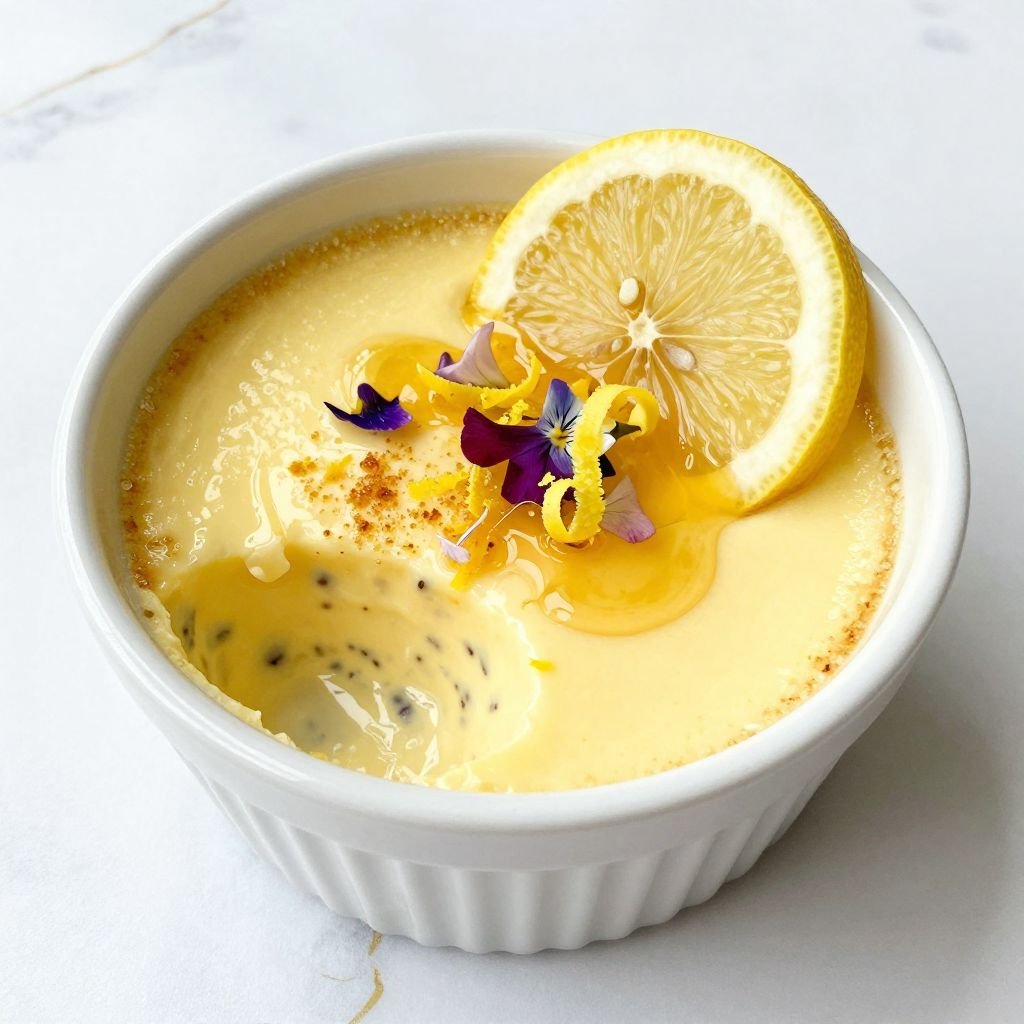
Store the baked custards (before adding sugar and torching) covered with plastic wrap in the refrigerator for up to 3 days. The caramelized sugar topping softens after 30 minutes, so always torch just before serving. Serve alongside fresh berries, a sprig of mint, or delicate butter cookies for an elevated dessert experience. The cold custard against the warm, crackly sugar creates the perfect temperature contrast.
These elegant custards prove that French patisserie magic is entirely achievable in your own kitchen — torch in hand, you’re moments away from dessert perfection.