
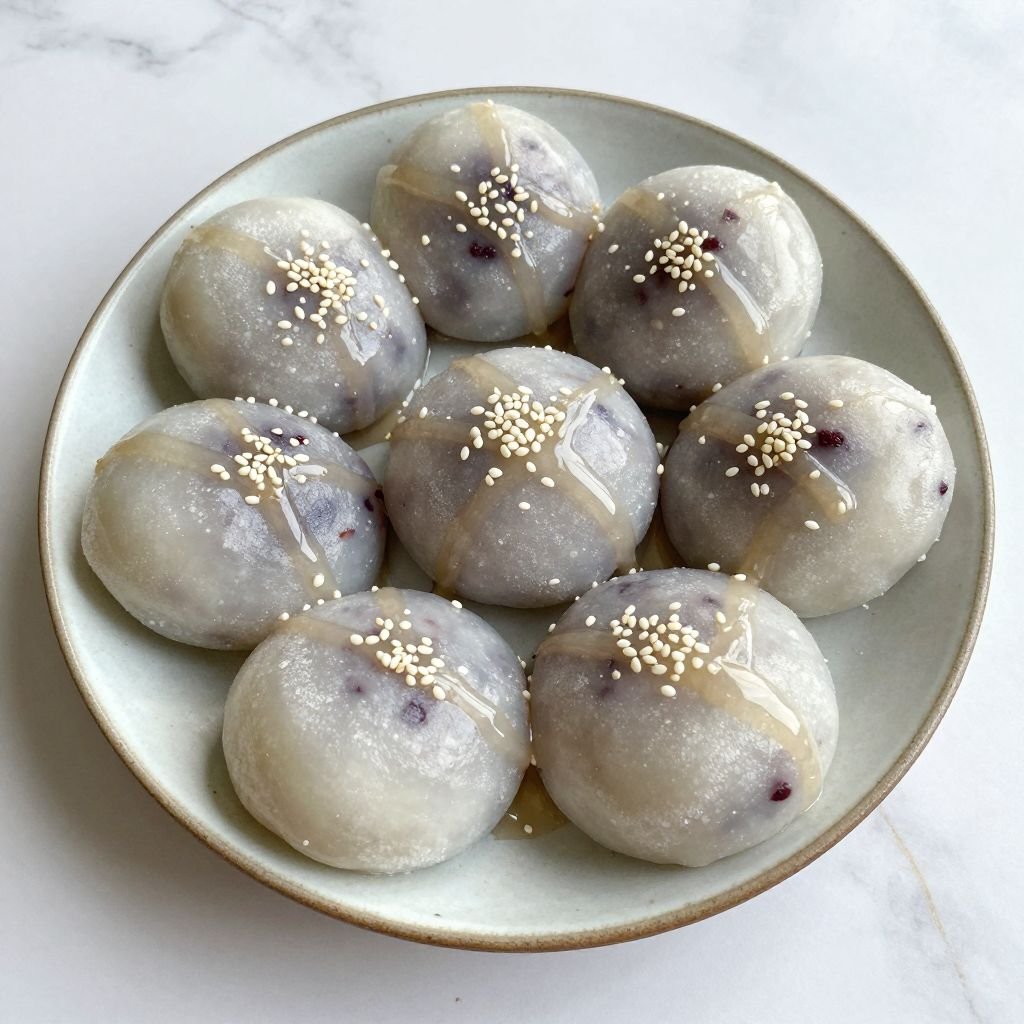
The first bite of a well-made red bean paste mochi is a study in contrasts — your teeth sink through soft, pillowy mochi skin into a sweet, earthy filling that’s been perfected over centuries of Japanese confectionery tradition. This traditional treat, known as daifuku mochi, combines chewy glutinous rice dough with smooth anko filling for a dessert that’s both comforting and elegant enough to serve at tea ceremonies.
Why You’ll Love This Recipe
- Ready in under an hour with just 5 core ingredients and no special equipment beyond a microwave or steamer
- Naturally gluten-free when made with sweet rice flour, making it accessible for those avoiding wheat
- Make-ahead friendly — these keep beautifully for 2-3 days wrapped individually, perfect for meal prep or gift-giving
- Customizable sweetness so you can adjust the sugar level to match your taste preferences or use store-bought anko to save time
- Impressive presentation with minimal effort — the smooth, snow-white exterior dusted with potato starch looks bakery-worthy every time
Pro Tips
- Work quickly once the mochi is cooked — it becomes harder to shape as it cools, so have your filling portioned and workspace prepared before starting
- Use potato starch, not cornstarch, for dusting — it prevents sticking better and doesn’t leave a raw taste if some remains on the surface
- Microwave method is foolproof for beginners compared to steaming, and stirring halfway through ensures even cooking without lumps
- Stretch, don’t press the mochi around the filling using a pinching motion at the seam — this creates a thinner, more uniform wrapper without tearing
Traditional Red Bean Paste Mochi
Ingredients
Method
- Roll the red bean paste into 8 equal balls (about 1 tablespoon each) and set aside on a plate. Generously dust a large work surface and a separate plate with potato starch.
- In a microwave-safe bowl, whisk together the sweet rice flour, sugar, and water until completely smooth with no lumps remaining.
- Cover the bowl loosely with plastic wrap and microwave on high for 2 minutes. Remove and stir vigorously with a wet spatula, then microwave for another 1 minute until the dough is translucent and glossy.
- Immediately turn the hot mochi dough onto the prepared starchy surface. Dust the top heavily with more potato starch and let cool for 2-3 minutes until safe to handle.
- Lightly oil your hands, then divide the mochi into 8 equal pieces using a bench scraper or knife. Work with one piece at a time, keeping others covered.
- Flatten one mochi piece into a 3-4 inch circle in your palm. Place a red bean ball in the center and gather the edges upward, pinching and stretching the dough to seal completely at the top.
- Twist off any excess dough at the seam, then flip the mochi smooth-side up and gently roll between your palms to create a round shape. Place seam-side down on the starchy plate.
- Repeat with remaining pieces, dusting your hands with potato starch as needed. Brush off excess starch with a soft pastry brush before serving.
Frequently Asked Questions
Can I use store-bought red bean paste instead of homemade?
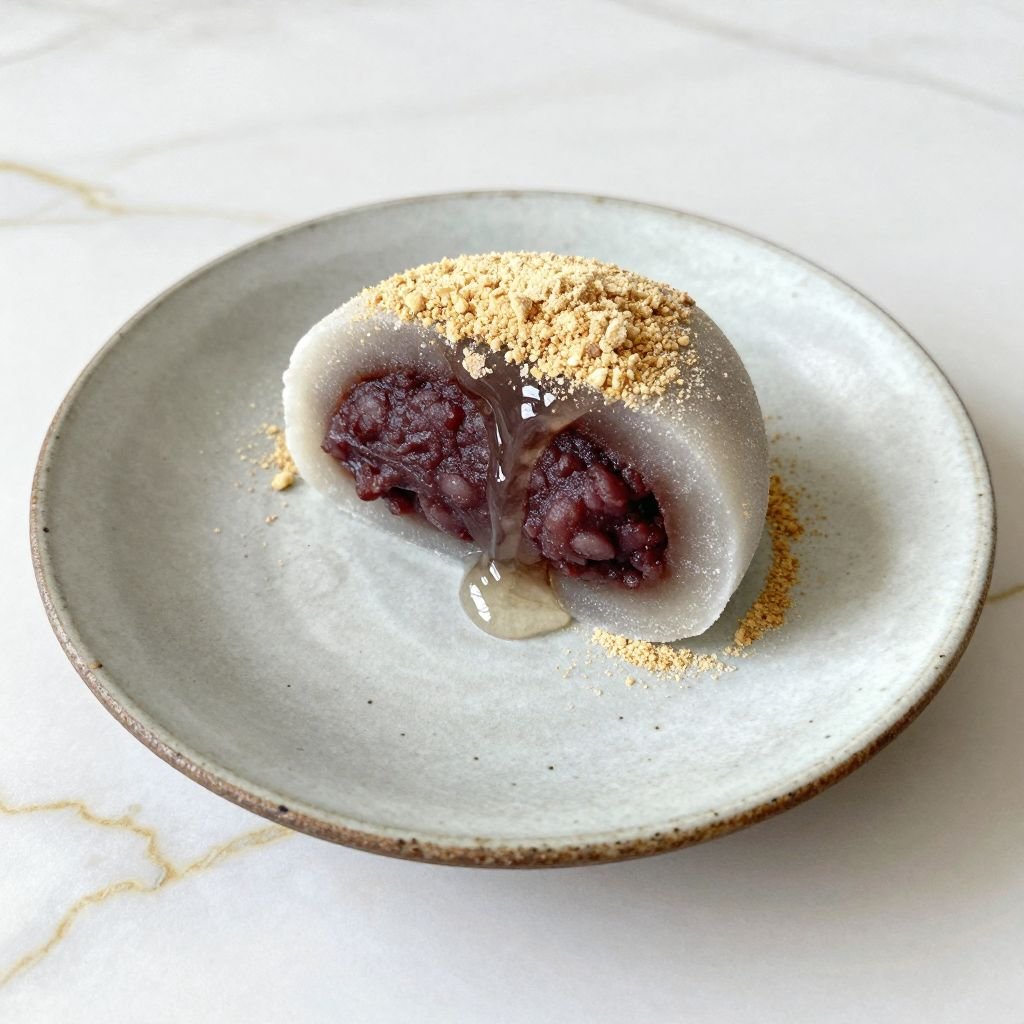
Absolutely! Look for canned tsubu-an (chunky) or koshi-an (smooth) at Asian grocery stores. This cuts your prep time in half and still delivers authentic flavor.
Why is my mochi too sticky to work with?
The dough needs more potato starch on your hands and work surface. Don’t be shy — coat everything generously. If it’s still unmanageable, you can briefly refrigerate it for 5 minutes to firm up slightly.
How do I prevent the filling from showing through?
Roll your filling balls smaller (about 1 tablespoon each) and stretch the mochi wrapper to at least 3-4 inches in diameter before wrapping. The dough should be thin but not transparent.
Can I freeze these for later?
Yes, freeze individually wrapped mochi in an airtight container for up to 1 month. Thaw at room temperature for 30 minutes before serving — they’ll return to their soft, chewy texture.
Storage & Serving
Store wrapped mochi at room temperature for up to 2 days or refrigerate for 3-4 days in an airtight container with parchment between layers. Bring refrigerated ones to room temperature 20 minutes before eating for the best texture. Serve alongside green tea for a traditional experience, dust with kinako (roasted soybean powder) for extra flavor, or present them in decorative paper cups for an elegant afternoon tea addition.
These tender rice cakes reward patience in the shaping process but forgive small imperfections — each one you make will be better than the last, so roll up your sleeves and enjoy the meditative rhythm of traditional Japanese sweet-making.