
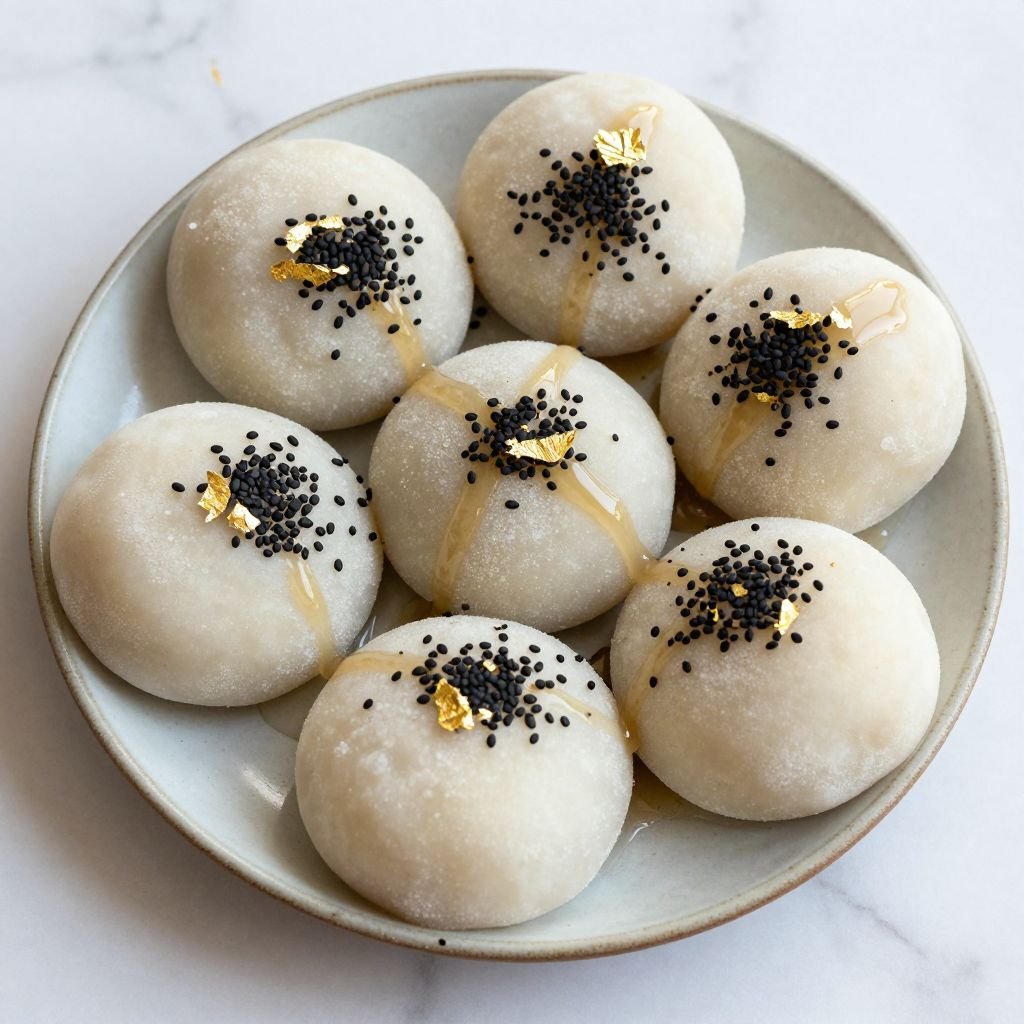
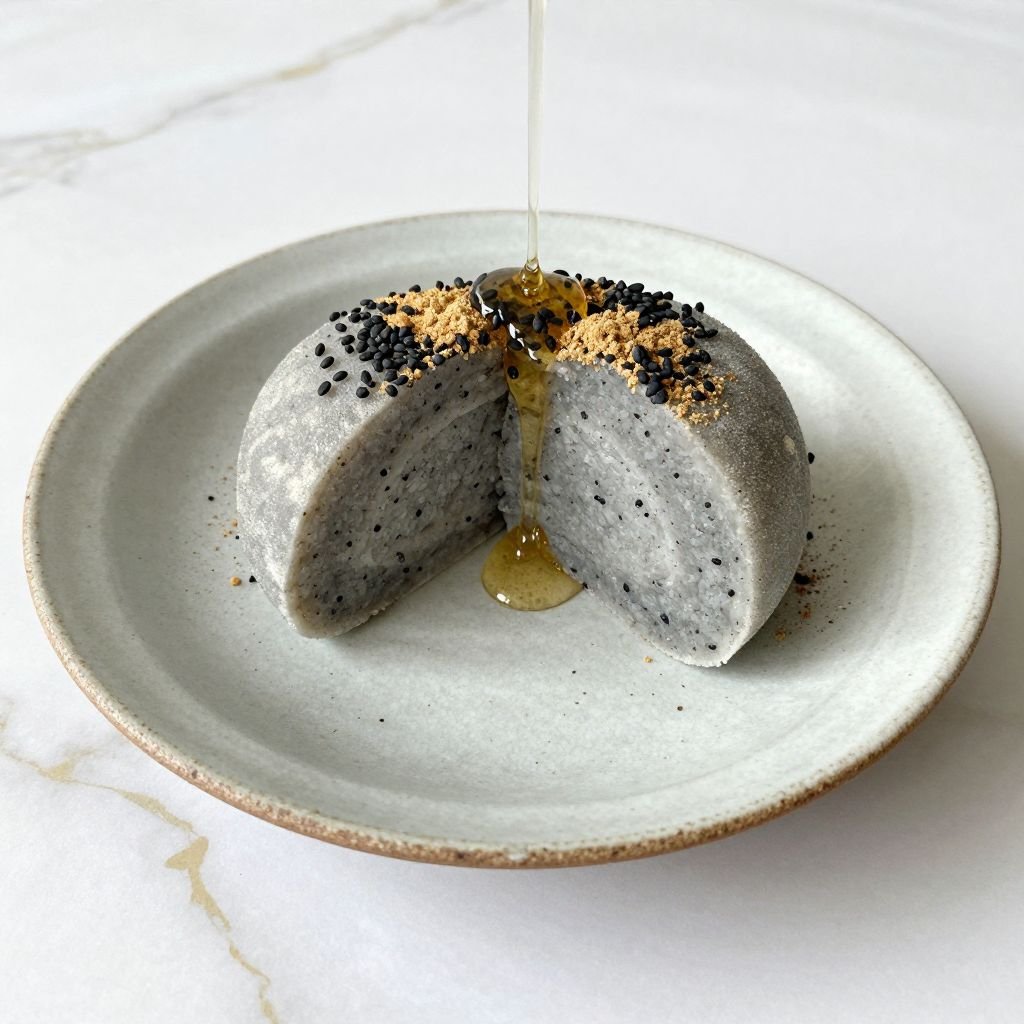
The first bite delivers an addictive chew — soft, stretchy, and deeply nutty with the unmistakable toasted flavor of black sesame. These little mochi squares are unlike any dessert you’ve tried: they’re naturally gluten-free, wonderfully chewy, and strike that perfect balance between sweet and earthy. The striking dark swirl makes them as stunning on a dessert table as they are satisfying to eat.
Why You’ll Love This Recipe
- One-bowl simplicity — Mix everything in a single bowl, steam or microwave, and you’re done in under 40 minutes
- Naturally gluten-free — Made with sweet rice flour (mochiko), no substitutions needed for wheat-free friends
- Make-ahead friendly — These keep beautifully at room temperature for 3 days, actually improving in texture as they rest
- Stunning presentation — The dark, marbled appearance looks bakery-elegant with zero decorating skills required
- Unique flavor profile — Black sesame brings toasted, nutty depth that sets these apart from standard mochi
Pro Tips
- Toast your sesame paste — If using black sesame powder, toast it in a dry skillet for 2-3 minutes before mixing. This deepens the flavor and brings out natural oils for better texture.
- Check doneness with the stick test — A toothpick inserted in the center should come out mostly clean with just a few sticky bits. Oversteaming makes them dense rather than chewy.
- Oil your knife generously — Mochi is incredibly sticky. Coat your cutting knife with neutral oil and wipe it clean between each slice for neat squares.
- Let them cool completely before cutting — Warm mochi is too soft to slice cleanly. Wait at least 30 minutes after steaming for the best results.
Chewy Black Sesame Mochi
Ingredients
Method
- Line an 8-inch square baking pan with parchment paper, letting it overhang on two sides. Spray generously with oil or brush with neutral oil.
- In a large mixing bowl, whisk together the mochiko, sugar, and salt until no lumps remain.
- In a separate bowl, whisk the milk, water, melted butter, vanilla extract, and black sesame paste until the paste is fully dissolved and the mixture is smooth.
- Pour the wet ingredients into the dry ingredients and whisk vigorously until you have a completely smooth, pourable batter with no flour pockets.
- Pour the batter into the prepared pan and tap it firmly on the counter 3-4 times to release air bubbles.
- Set up a steamer with boiling water. Place the pan in the steamer, cover with a clean kitchen towel under the lid to catch condensation, and steam for 35-40 minutes.
- Test doneness by inserting a toothpick into the center — it should come out mostly clean with just a few sticky bits. The surface should look set and glossy.
- Remove from the steamer and let cool completely in the pan for at least 30 minutes before handling.
- Oil a sharp knife generously and slice into 16 squares, wiping and re-oiling the blade between cuts. Dust with potato starch if desired to prevent sticking.
Frequently Asked Questions
Can I use white sesame instead of black sesame?
Yes, though you’ll lose the distinctive dark color and some of the earthy depth. White sesame works well but tastes slightly sweeter and milder. Toast it first for maximum flavor.
Why is my mochi too hard after cooling?
This usually means it was oversteamed or the ratio of liquid to flour was too low. Next time, reduce steaming by 3-5 minutes and ensure you’re measuring mochiko by spooning it into the cup rather than packing it.
Where can I find black sesame paste?
Look in Asian grocery stores (Japanese or Chinese sections) or order online. Black sesame powder mixed with a bit of tahini also works — use 3 tablespoons powder plus 2 tablespoons tahini to replace 1/4 cup paste.
How do I prevent the mochi from sticking to the pan?
Line your steaming pan with parchment paper and spray it generously with oil. You can also dust the paper with a thin layer of potato starch before pouring the batter.
Storage & Serving
Store these at room temperature in an airtight container for up to 3 days — they actually become chewier and better on day two. For longer storage, freeze individually wrapped pieces for up to 2 months. Serve them as an afternoon tea treat, alongside fresh fruit and green tea, or dust with kinako (roasted soybean powder) for traditional Japanese flair. They’re perfect for lunar new year celebrations or any time you want an elegant, not-too-sweet dessert.
These little squares prove that sometimes the most memorable desserts are the simplest ones — give them a try this weekend and discover your new favorite chewy treat.