
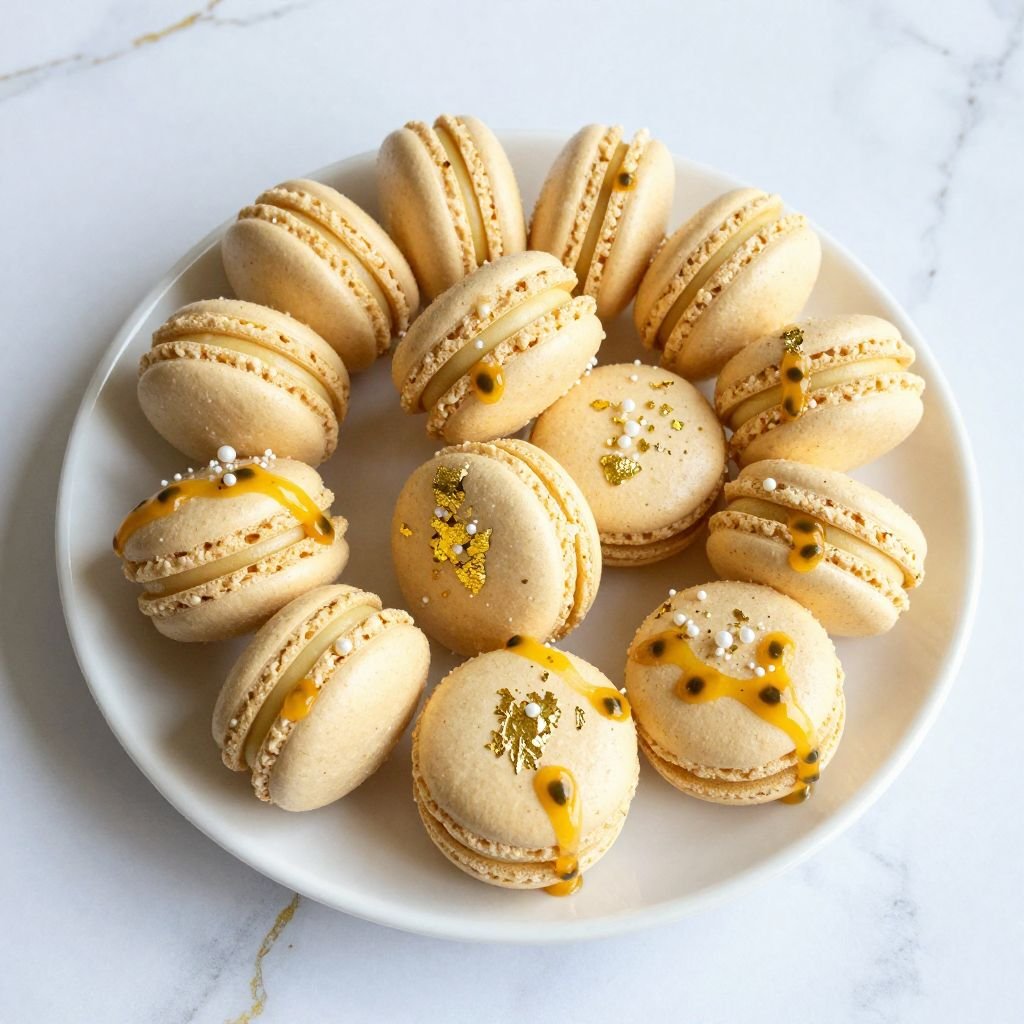
Delicate almond shells meet a tangy tropical center in these elegant French macarons that taste like biting into a sunshine cloud. The crisp outer shell shatters gently to reveal a chewy interior, while the passion fruit buttercream delivers that perfect balance of sweet and tart that makes your taste buds dance. These aren’t just cookies—they’re edible jewelry that transform any occasion into something extraordinary.
Why You’ll Love This Recipe
- Master the famous “feet” with foolproof techniques that work even on humid days
- Tropical passion fruit cuts through the sweetness with vibrant, natural tartness that’s never cloying
- Make the shells 2-3 days ahead and fill them the day of your event for stress-free entertaining
- Each bite delivers three distinct textures: crisp shell, chewy interior, and silky buttercream
- Naturally gluten-free and stunning enough to sell at a French pâtisserie
Pro Tips
- Age your egg whites uncovered in the fridge for 24-48 hours before using—this reduces moisture and creates more stable meringue that holds those coveted feet
- Tap your baking sheet firmly on the counter 5-6 times after piping to release trapped air bubbles that would crack the shells during baking
- Test one shell before committing to the full batch: it should release cleanly from the parchment without sticking. If it sticks, bake 1-2 minutes longer next time
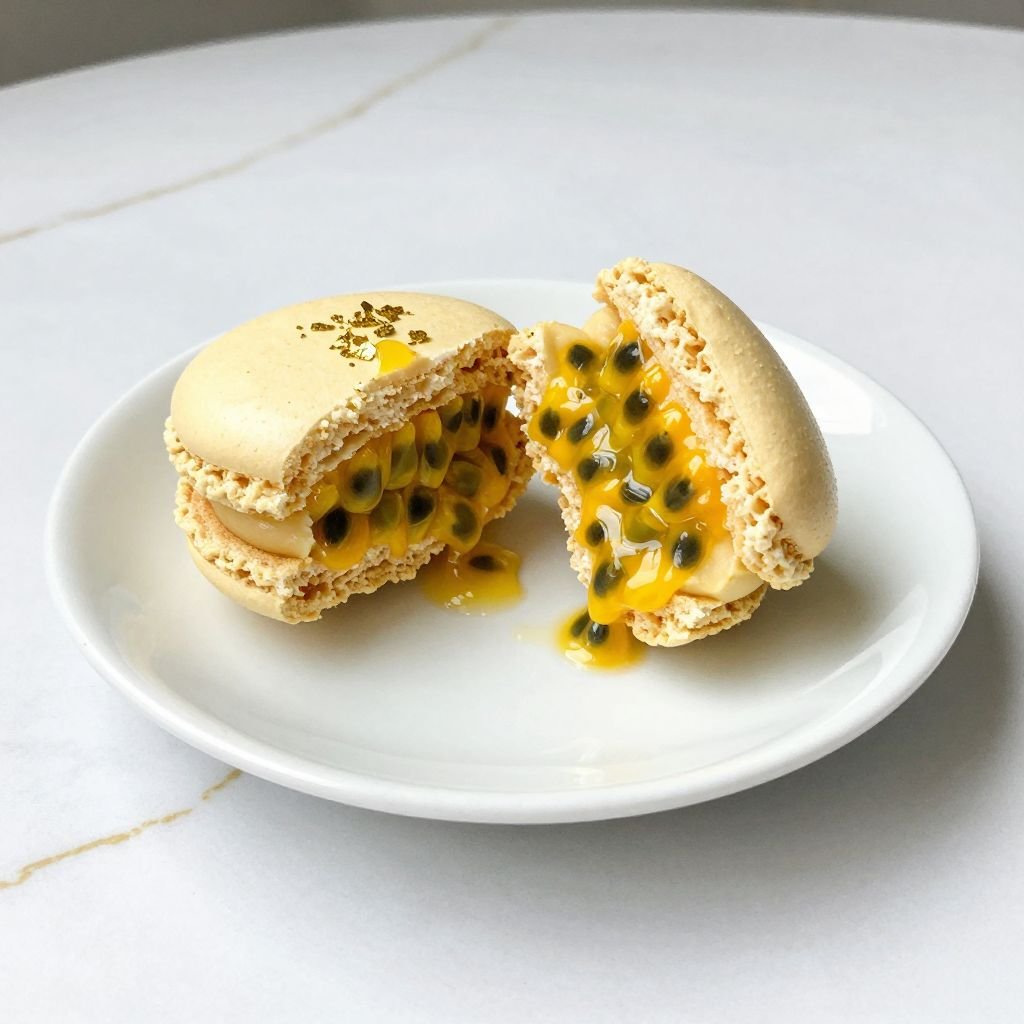
- Strain your passion fruit pulp to remove seeds for ultra-smooth buttercream, but save a few seeds to swirl in at the end for visual appeal and texture bursts
French Passion Fruit Macarons
Ingredients
Method
- Sift almond flour and 1 cup powdered sugar together twice into a bowl, discarding any large pieces that don’t pass through. Set aside.
- In a spotlessly clean metal bowl, whip egg whites with cream of tartar on medium speed until foamy. Gradually add granulated sugar one tablespoon at a time, then increase to high speed and whip until stiff, glossy peaks form, about 4-5 minutes.
- Add a drop of yellow food coloring if using, then fold in the almond flour mixture in three additions using a flexible spatula. Use a J-motion to fold, pressing batter against the side of the bowl. Test consistency by letting batter fall—it should flow like lava and a ribbon should disappear within 10-15 seconds.
- Transfer batter to a piping bag fitted with a round tip. Pipe 1.5-inch circles onto parchment-lined baking sheets, spacing them 2 inches apart. Tap the sheet firmly on the counter 5-6 times to release air bubbles.
- Let shells rest uncovered at room temperature for 30-60 minutes until a skin forms and they feel dry to the touch. Preheat oven to 300°F during the last 15 minutes of resting.
- Bake one sheet at a time for 14-16 minutes, rotating halfway through. Shells are done when they don’t wobble when gently touched and peel cleanly from parchment. Cool completely on the baking sheet.
- For buttercream, beat softened butter on high speed for 3 minutes until fluffy. Add sifted powdered sugar and beat for 2 minutes. Add strained passion fruit pulp and heavy cream, beating until smooth and glossy.
- Match shells by size. Pipe or spread buttercream on flat side of one shell, then sandwich with a matching shell, pressing gently to spread filling to the edges. Refrigerate assembled macarons in an airtight container for 24 hours before serving for best texture.
Frequently Asked Questions
Can I use passion fruit juice instead of fresh pulp?
Fresh or frozen pulp works best because the concentration of flavor is much stronger than juice. If using juice, reduce it by half on the stovetop first to intensify the tartness and prevent watery buttercream.
Why did my macarons crack on top?
Cracking usually means the shells weren’t dried long enough before baking. After piping, let them rest at room temperature for 30-60 minutes until you can gently touch the surface without any batter sticking to your finger. The shell should feel dry and form a slight skin.
How do I know when the meringue is ready?
Whip until stiff, glossy peaks form and the bowl can be turned upside down without the meringue moving. When you lift the whisk, the peak should stand straight up without drooping—this is crucial for proper macaron structure.
My macarons are hollow inside—what went wrong?
Hollow shells typically result from overbeating the batter during macaronage or baking at too high a temperature. Fold just until the batter flows like lava and a ribbon disappears back into itself within 10-15 seconds. Lower your oven by 10°F if hollowness persists.
Storage & Serving
Store filled macarons in an airtight container in the refrigerator for up to 5 days—they actually improve after 24 hours as the filling softens the shells to perfect chewiness. Bring to room temperature 20 minutes before serving for the best texture and flavor. Serve them on a tiered stand for afternoon tea, package them in clear boxes for elegant gifts, or arrange them as the centerpiece of a dessert board with fresh berries and cream. Unfilled shells freeze beautifully for up to 3 months.
Give yourself the gift of patience with these beauties—your first batch teaches you what the second batch perfects, and by the third, you’ll be piping like a Parisian pastry chef.