
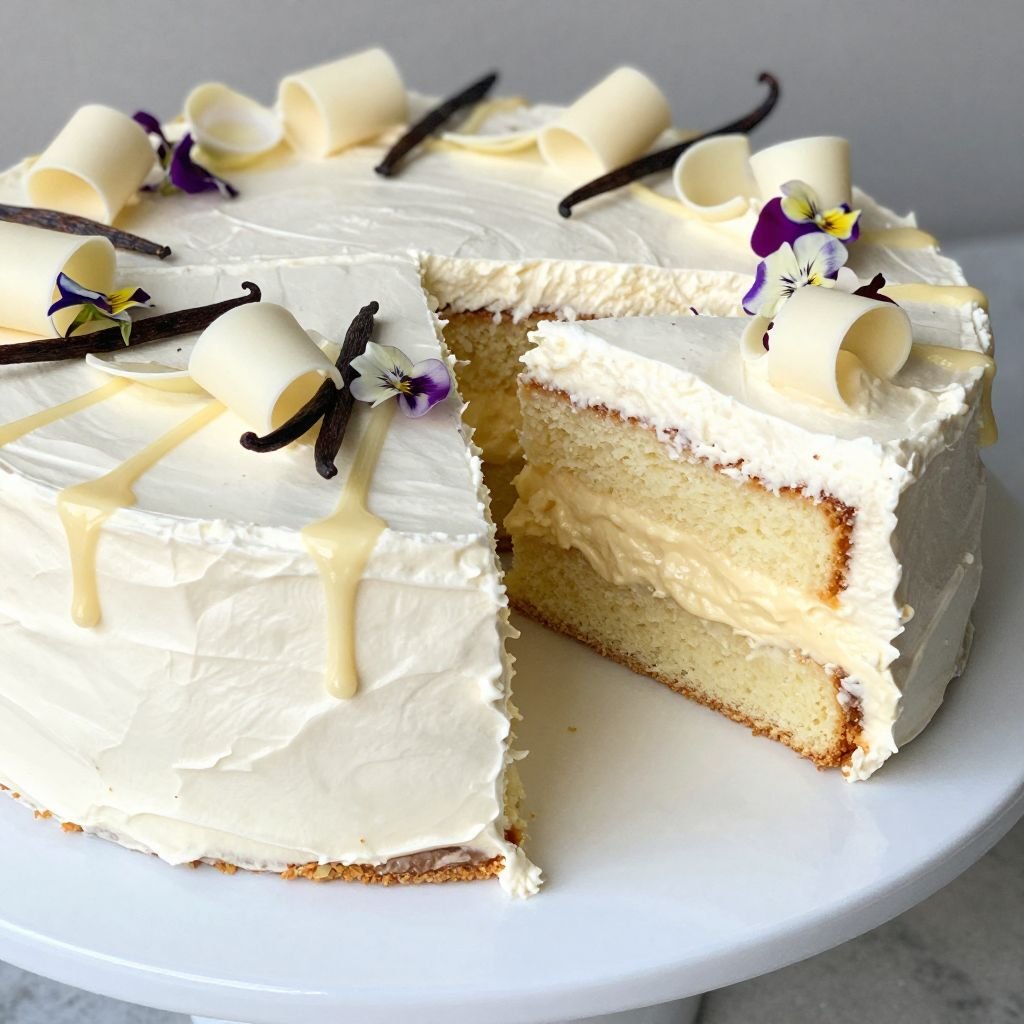
The first slice reveals towering layers of tender vanilla crumb, barely kissed with real vanilla bean flecks, sandwiched between clouds of silky buttercream. This is the layer cake that converts skeptics — proof that “simple vanilla” can be the most sophisticated dessert in the room. With a texture so soft it practically melts on your tongue and a vanilla flavor that’s bold without being artificial, this cake earns its place as a new classic.
Why You’ll Love This Recipe
- Bakery-quality texture at home with just one mixing bowl and standard ingredients you already have
- Real vanilla bean paste creates visible specks and authentic flavor that extract alone can’t match
- Make-ahead friendly since the layers actually improve in texture after a night wrapped in the fridge
- Feeds 12-16 guests but scales down beautifully to a 6-inch version for smaller celebrations
- The buttercream recipe is foolproof and pipes like a dream, even for decorating beginners
Pro Tips
- Bring all dairy ingredients to room temperature before mixing — this single step prevents dense, sunken layers by allowing proper emulsification
- Use cake strips or damp towel strips around your pans to ensure perfectly flat layers that need minimal trimming
- Brush each layer with simple syrup (equal parts sugar and water, cooled) before frosting to lock in moisture for days
- Chill the crumb-coated cake for 20 minutes before applying the final frosting layer — this prevents crumbs from mixing into your beautiful finish coat
Classic Vanilla Bean Layer Cake
Ingredients
Method
- Preheat oven to 350°F (175°C). Grease three 8-inch round cake pans, line bottoms with parchment paper, and lightly flour the sides.
- In a medium bowl, whisk together the cake flour, baking powder, and salt until evenly combined. Set aside.
- In a large mixing bowl, beat the softened butter and granulated sugar together on medium-high speed for 3-4 minutes until light and fluffy.
- Add eggs one at a time, beating well after each addition and scraping down the bowl as needed. Mix in the vanilla bean paste until fully incorporated.
- In a small bowl, whisk together the milk and sour cream. Add the dry ingredients to the butter mixture in three additions, alternating with the milk mixture, beginning and ending with dry ingredients. Mix on low speed just until combined after each addition.
- Divide batter evenly among the three prepared pans (about 450g per pan for accuracy). Smooth the tops with an offset spatula.
- Bake for 25-28 minutes, rotating pans halfway through, until a toothpick inserted in the center comes out clean and the edges just begin to pull away from the pan sides. Cool in pans for 10 minutes, then turn out onto wire racks to cool completely.
- For the buttercream, beat the softened butter on medium speed for 2 minutes until creamy. Gradually add powdered sugar one cup at a time, beating on low after each addition.
- Add heavy cream, vanilla bean paste, and salt. Beat on low for 30 seconds, then increase to medium-high and whip for 3 minutes until light and fluffy.
- Place the first cake layer on a serving plate or cake board. Spread 3/4 cup buttercream evenly over the top. Repeat with the second layer. Top with the final layer and apply a thin crumb coat of frosting over the entire cake. Chill for 20 minutes, then frost with remaining buttercream, smoothing with a bench scraper or offset spatula.
Frequently Asked Questions
Can I use vanilla extract instead of vanilla bean paste?
Yes, substitute with 2 tablespoons pure vanilla extract. You’ll lose the visual bean specks but the flavor will still be excellent. Avoid imitation vanilla, which tastes chemical in a delicate cake like this.
How do I prevent my layers from doming in the center?
Lower your oven temperature by 25°F and bake slightly longer, or use cake strips wrapped around the pans. Both methods promote even heat distribution and flat tops.
Can I make this cake ahead of time?
Absolutely. Bake layers up to 2 days ahead, wrap tightly in plastic wrap, and refrigerate. Assemble and frost up to 24 hours before serving. The cake actually tastes better after the flavors meld overnight.
Why is my buttercream too soft to pipe?
Your butter was likely too warm. Chill the frosting for 15 minutes, then rewhip on medium speed. If it’s still loose, beat in 1/4 cup more powdered sugar to stabilize it.
Storage & Serving
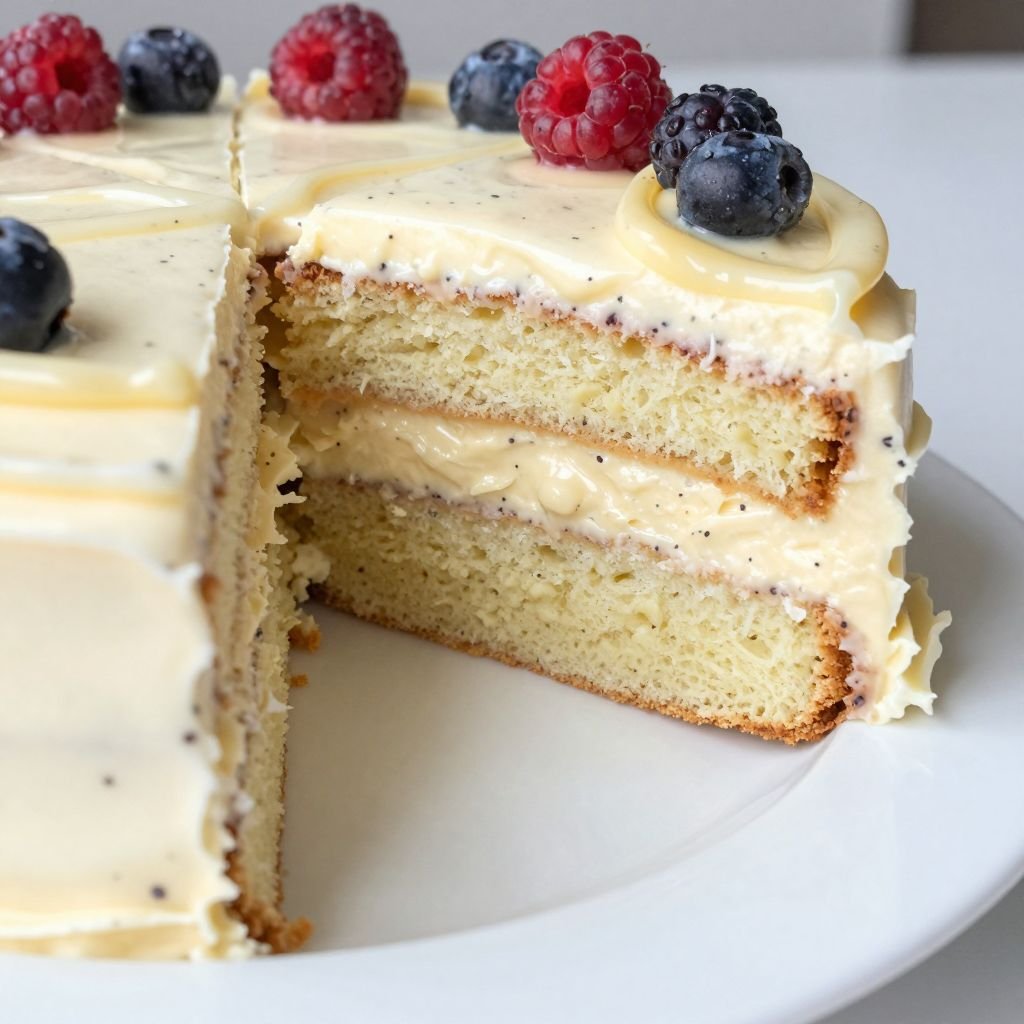
Store the frosted cake in the refrigerator for up to 5 days, covered with a cake dome or loosely tented foil. Bring to room temperature 1 hour before serving for the best texture. Freeze unfrosted layers wrapped in plastic and foil for up to 3 months. Serve alongside fresh berries, a drizzle of raspberry coulis, or simply with coffee for an elegant afternoon treat.
This is the kind of cake that makes ordinary Tuesdays feel like celebrations — give it a try and watch it become your go-to for every occasion.