
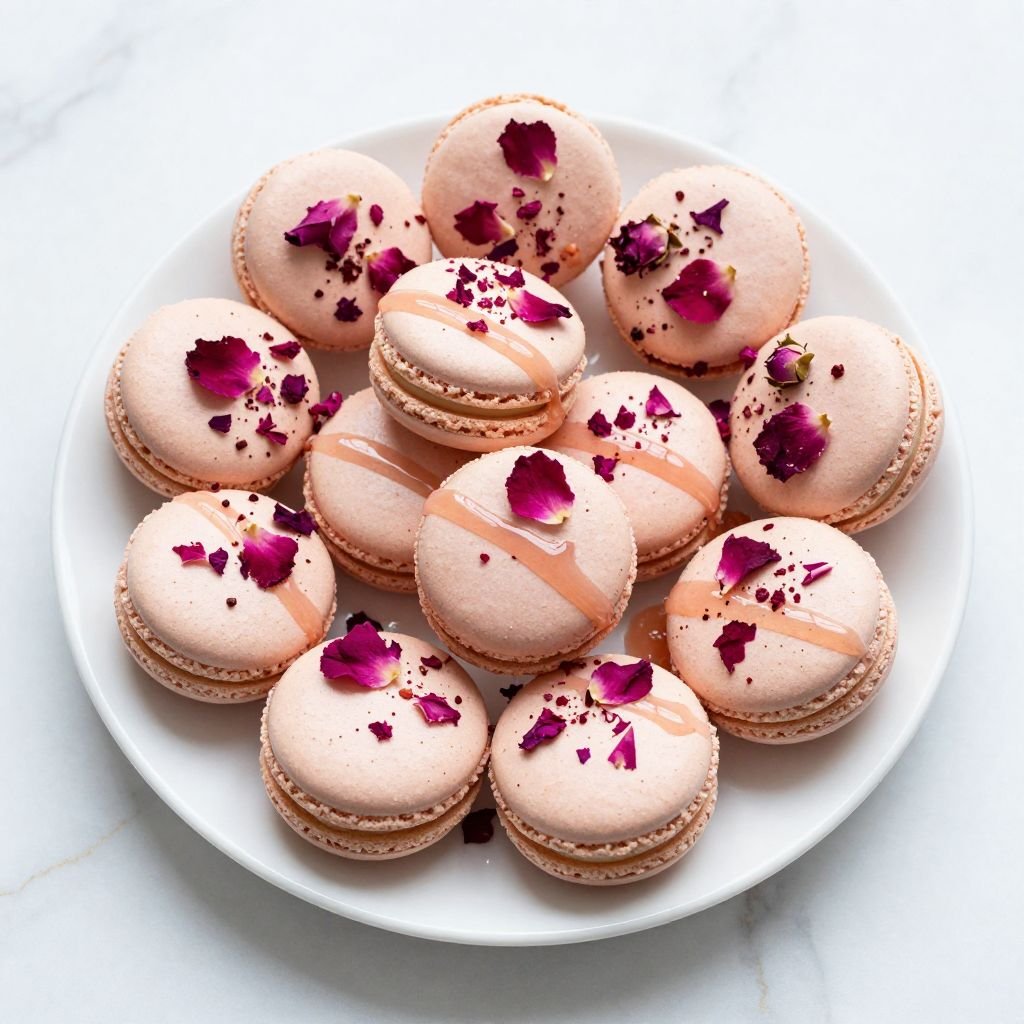
The first bite reveals a crisp shell that shatters gently, giving way to a cloudlike interior and a silky buttercream infused with real rose water. These French confections demand patience and precision, but the reward is a dessert so elegant it transforms any occasion into something extraordinary.
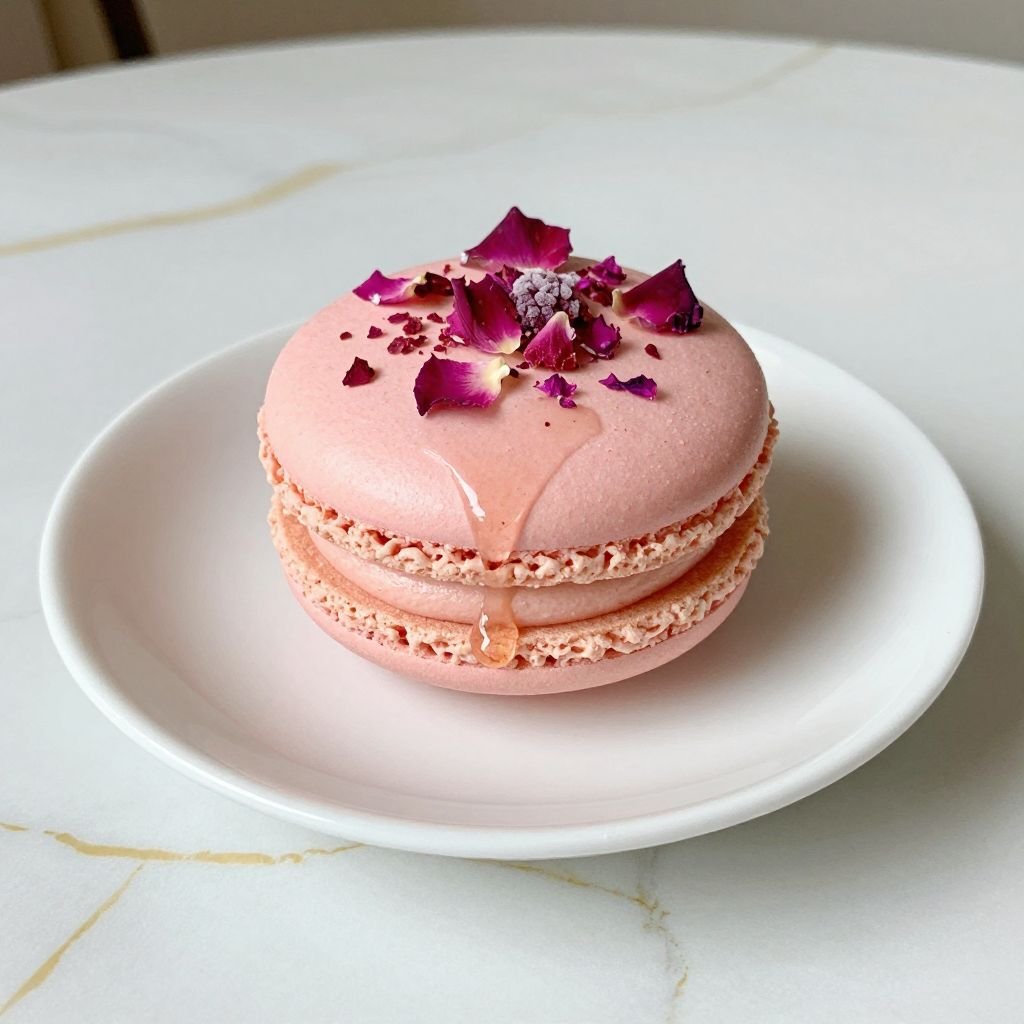
Each macaron emerges from the oven with smooth, glossy domes and those signature ruffled “feet” that signal perfect technique. The rose buttercream strikes a delicate balance — floral without tasting like soap, sweet without being cloying, and just rich enough to complement the airy almond shells.
Why You’ll Love This Recipe
- Master a showstopping technique that looks far more difficult than it actually is with clear, tested instructions
- Rose water adds sophisticated floral notes that pair beautifully with the almond shells without overwhelming
- Make the shells up to 5 days ahead and fill them the morning of your event for stress-free entertaining
- Yields 24-30 perfectly sized sandwich cookies, ideal for gifting or serving at tea parties and celebrations
- Stabilized Italian meringue method produces consistent results even in humid climates
Pro Tips
- Age your egg whites overnight in the refrigerator, uncovered, to reduce moisture and strengthen the meringue structure for better feet development
- Tap the baking sheet firmly on the counter 3-4 times after piping to release trapped air bubbles that would otherwise create cracked tops
- Test one shell before baking the whole batch — it should have formed a dry skin that doesn’t stick to your finger when lightly touched, typically 30-45 minutes depending on humidity
- Use gel food coloring instead of liquid to achieve vibrant pink hues without adding excess moisture that can ruin the batter consistency
- Let filled macarons rest in the refrigerator for 24 hours before serving — this “maturation” allows flavors to meld and creates the perfect soft interior texture
Delicate Rose Buttercream Macarons
Ingredients
Method
- Line two baking sheets with parchment paper or silicone mats. Sift together the almond flour and 100g powdered sugar twice to remove lumps, then set aside.
- In a stand mixer bowl, beat 25g egg whites with cream of tartar on medium speed until foamy. Gradually add granulated sugar while increasing speed to high, beating until stiff, glossy peaks form, about 4-5 minutes. Add gel coloring in the final minute.
- Gently fold the almond flour mixture into the meringue in three additions using a spatula. Perform macaronage by pressing the batter against the bowl’s side and folding until it flows like lava and ribbons back into itself within 10 seconds. The batter should be smooth and glossy.
- Transfer batter to a piping bag fitted with a 1/2-inch round tip. Pipe 1.5-inch circles onto prepared sheets, spacing them 2 inches apart. Tap sheets firmly on the counter 3-4 times to release air bubbles.
- Let shells rest uncovered at room temperature for 30-60 minutes until a dry skin forms that doesn’t stick when lightly touched. Preheat oven to 300°F (150°C) during the last 15 minutes of resting.
- Bake one sheet at a time for 14-16 minutes, rotating halfway through. Shells are done when they don’t wobble when gently touched. Let cool completely on the baking sheet before removing.
- For the buttercream, beat softened butter on high speed for 3 minutes until pale and fluffy. Gradually add 1.5 cups powdered sugar, then mix in rose water, heavy cream, and salt. Beat for 2 more minutes until light and spreadable.
- Match shells by size and turn half upside down. Pipe or spread a generous teaspoon of buttercream onto each upturned shell, then sandwich with a matching top shell, pressing gently until the filling reaches the edges.
- Refrigerate filled macarons in an airtight container for 24 hours before serving to allow the shells to soften and flavors to develop. Bring to room temperature 20 minutes before serving for optimal texture.
Frequently Asked Questions
Can I make macarons without a kitchen scale?
While possible, a kitchen scale dramatically increases success rates. Macaron batter is highly sensitive to ratios, and volume measurements (cups) vary too much based on how ingredients settle. Investing in a $15 digital scale will save you countless failed batches.
Why did my macarons crack on top?
Cracked tops usually mean the shells weren’t dried long enough before baking, or your oven temperature was too high. Always let them rest until a skin forms, and use an oven thermometer to verify your actual temperature matches the dial setting.
What can I substitute for rose water?
Try vanilla bean paste for classic French macarons, or lavender extract (use half the amount) for another floral option. Orange blossom water works at a 1:1 ratio. Avoid imitation extracts, which taste artificial in delicate buttercream.
How do I prevent hollow macarons?
Hollow shells result from undermixing the batter (macaronage stage) or baking at too high a temperature. The batter should flow like lava and ribbon back into itself within 10 seconds. Lower your oven by 10°F if hollowness persists despite proper mixing.
Storage & Serving
Store unfilled shells in an airtight container at room temperature for up to 5 days, or freeze them for 2 months. Filled macarons keep in the refrigerator for 5 days and actually improve after 24 hours as the filling softens the shells. Bring them to room temperature 20 minutes before serving for the best texture. Arrange on a tiered stand for afternoon tea, package in clear boxes tied with ribbon for wedding favors, or serve alongside champagne for an elegant brunch finale.
These delicate confections prove that the finest desserts aren’t just tasted — they’re experienced. Give yourself grace on your first attempt, and soon you’ll be piping perfect shells with confidence.