
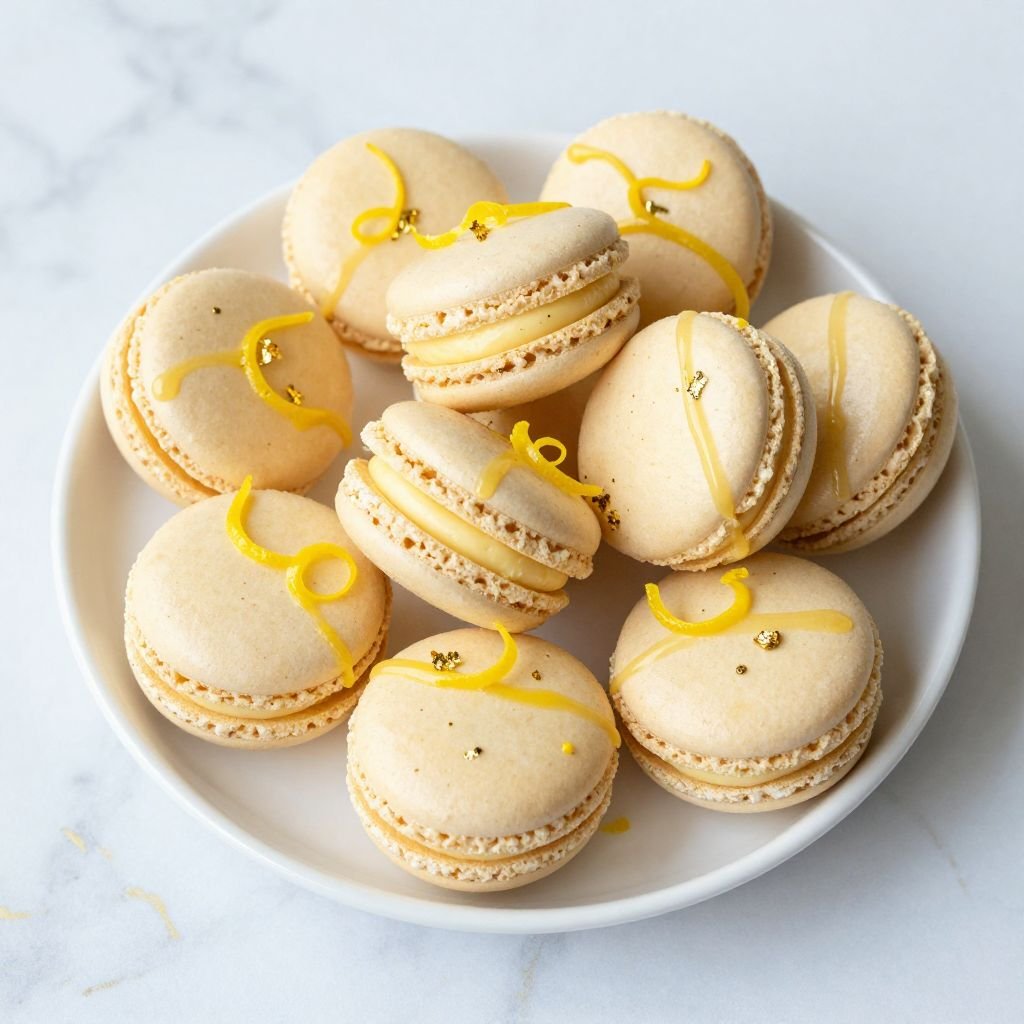
The first crack of a perfectly crisp macaron shell, giving way to a smooth, pillowy center, while bright lemon buttercream floods your palate with sunshine — this is what French pastry dreams are made of. These elegant sandwich cookies combine almond flour shells with a silky, citrus-spiked buttercream that balances sweetness with a gentle pucker. Despite their intimidating reputation, macarons follow straightforward science, and once you nail the technique, you’ll have a showstopping dessert that makes every occasion feel like a Parisian celebration.
Why You’ll Love This Recipe
- Master one base technique and customize the filling to any flavor you crave
- Creates 24-30 uniform sandwich cookies perfect for gifting or dessert tables
- The lemon buttercream adds brightness that cuts through the sweet meringue shells
- Can be made 2-3 days ahead and actually taste better after the shells soften slightly
- Impressive presentation that makes guests think you spent hours (when it’s mostly waiting time)
Pro Tips
- Age your egg whites in the fridge for 24-48 hours before using — older whites whip to stronger, more stable meringue that creates those signature “feet” on the shell bottoms
- Tap your baking sheet firmly on the counter 5-6 times after piping to release air bubbles, then let shells rest until they form a dry skin (20-40 minutes depending on humidity) before baking
- Use the “toothpick test” for doneness: gently touch the top of a shell, and if it doesn’t wiggle on its base, they’re ready to come out
- Pair shells by size before filling so every macaron looks professional and bites evenly — the slight imperfections disappear when you match similar shapes together
French Lemon Buttercream Macarons
Ingredients
Method
- Line two baking sheets with parchment paper or silicone mats. Sift together the almond flour and 100g powdered sugar twice to remove any lumps, then set aside.
- In a clean, dry mixing bowl, beat the egg whites and cream of tartar on medium speed until foamy. Gradually add the granulated sugar one tablespoon at a time, then increase to high speed and beat until stiff, glossy peaks form, about 5-7 minutes.
- Gently fold the almond flour mixture into the meringue in three additions using a spatula, turning the bowl and pressing the batter against the sides. The batter is ready when it flows like thick lava and a ribbon disappears back into the mixture within 10-15 seconds.
- Transfer the batter to a piping bag fitted with a round tip. Pipe 1.5-inch circles onto the prepared baking sheets, spacing them 1 inch apart. Tap each sheet firmly on the counter 5-6 times to release air bubbles.
- Let the piped shells rest uncovered at room temperature for 20-40 minutes until they form a dry, matte skin that doesn’t stick when gently touched. Meanwhile, preheat your oven to 300°F (150°C).
- Bake one sheet at a time for 15-18 minutes, rotating halfway through. The shells are done when they don’t wiggle on their bases when touched. Let cool completely on the baking sheets before removing.
- For the buttercream, beat the softened butter on medium-high speed for 3 minutes until pale and fluffy. Gradually add 1 1/2 cups sifted powdered sugar, then beat in the lemon juice, lemon zest, vanilla, and salt until smooth and creamy.
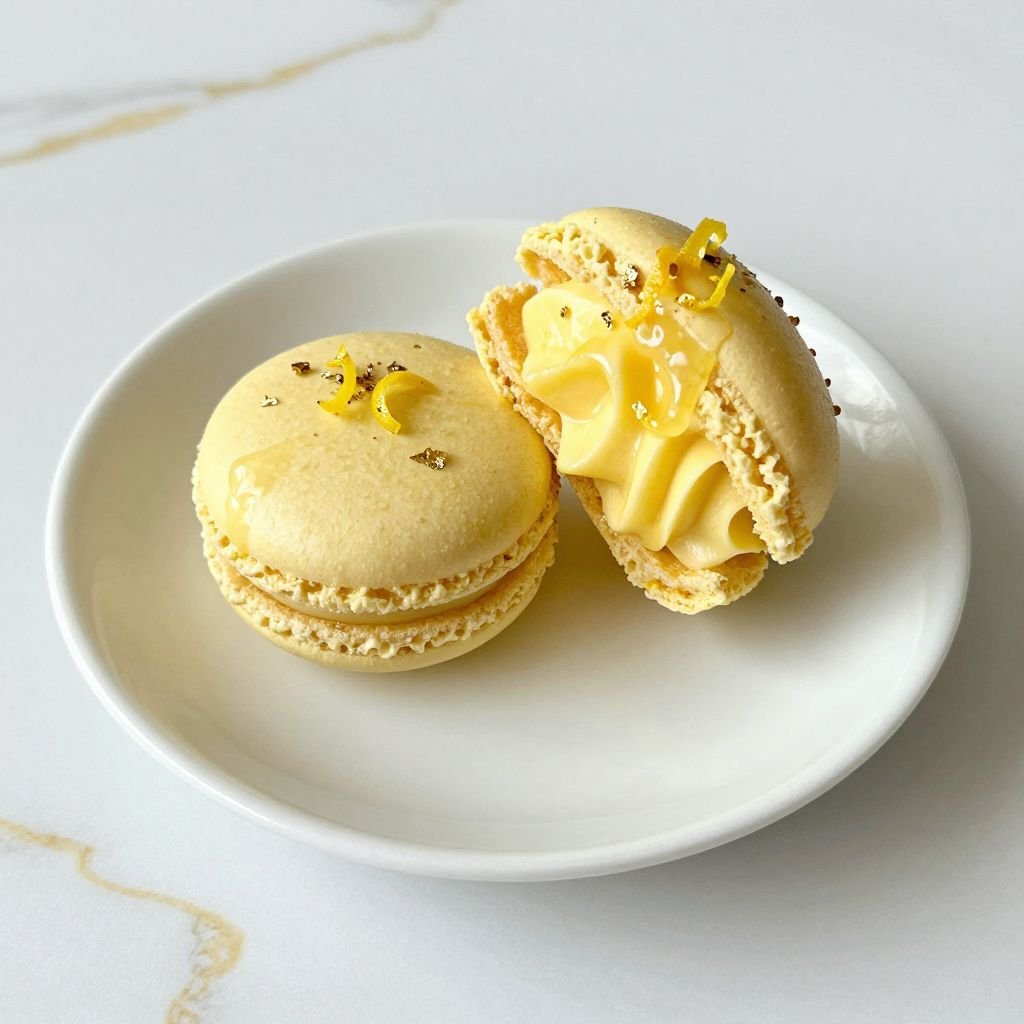
- Match macaron shells into pairs of similar size. Pipe or spread a generous amount of lemon buttercream onto the flat side of one shell, then gently sandwich with its pair. Press lightly so the filling reaches the edges without squishing out.
- Place filled macarons in an airtight container and refrigerate for 24 hours before serving to allow the shells to soften and the flavors to meld together perfectly.
Frequently Asked Questions
Why did my macarons crack on top?
Cracked tops usually mean the shells weren’t dried long enough before baking, or your oven temperature was too high. Make sure the shells feel completely dry and matte to the touch, and use an oven thermometer to verify your temp is accurate at 300°F.
Can I use bottled lemon juice instead of fresh?
Fresh lemon juice and zest are essential for bright, authentic flavor in the buttercream. Bottled juice tastes flat and slightly bitter by comparison. You’ll need about 2-3 medium lemons for this recipe.
How do I know when the macaronage is done?
The batter should flow like thick lava — lift your spatula and the ribbon should disappear back into the batter within 10-15 seconds. If it holds its shape, fold a few more times. Overmixing makes flat, spread-out shells, so err on the slightly undermixed side.
My shells are hollow inside — what went wrong?
Hollow shells typically come from underwhipped meringue or too much moisture in the batter. Beat your egg whites to stiff, glossy peaks that hold their shape firmly, and make sure you fully incorporate the dry ingredients during macaronage.
Storage & Serving
Store filled macarons in an airtight container in the refrigerator for up to 5 days, or freeze for up to 2 months between parchment paper layers. Let them come to room temperature for 20 minutes before serving for the best texture and flavor. Arrange on a tiered stand for afternoon tea, package in clear boxes for gifts, or serve alongside champagne for an elegant dessert course.
These delicate treats reward patience with pure elegance — give them a try and discover why macarons have captivated pastry lovers for generations.